
5 nhà sản xuất máy phân loại màu hạt hàng đầu năm 2026 | Máy phân loại hạt AI tốt nhất
Ngành công nghiệp chế biến hạt toàn cầu ngày càng trở nên cạnh tranh. Tiêu chuẩn an toàn thực phẩm cao hơn, yêu cầu xuất khẩu khắt khe hơn và chi phí lao động tăng cao đang thúc đẩy các nhà chế biến đầu tư vào công nghệ phân loại thông minh hơn và hiệu quả hơn. Cho dù chế biến hạnh nhân, quả óc chó, hạt dẻ cười, hạt phỉ, đậu phộng hay hạt điều, chất lượng sản phẩm nhất quán đã trở thành một trong những yếu tố quan trọng nhất ảnh hưởng đến sự hài lòng của khách hàng và khả năng cạnh tranh trên thị trường.
Kiểm tra thủ công truyền thống không còn khả năng đáp ứng các yêu cầu sản xuất hiện đại. Ngay cả các máy phân loại màu quang học thông thường cũng thường phải vật lộn để xác định các khuyết tật tinh vi như hư hại do côn trùng, đổi màu nhẹ, nếp nhăn bề mặt, mảnh vỏ, vết dầu hoặc vết nứt nhỏ. Do đó, máy phân loại màu hạt do AI cung cấp đã trở thành giải pháp ưa thích cho các bộ xử lý tìm kiếm độ chính xác phân loại cao hơn và chi phí vận hành thấp hơn.
Trong hướng dẫn này, chúng tôi so sánh năm nhà sản xuất máy phân loại màu hạt hàng đầu thế giới dựa trên sự đổi mới công nghệ, khả năng AI, độ chính xác phân loại, hiệu quả sản xuất, tính linh hoạt của ứng dụng, mạng lưới dịch vụ toàn cầu và giá trị tổng thể cho các bộ xử lý hạt thương mại.
Các nhà sản xuất được liệt kê dưới đây được trình bày không theo thứ tự cụ thể. Mỗi loại cung cấp những lợi thế độc đáo tùy thuộc vào quy mô sản xuất, giống hạt và yêu cầu chế biến.
Cách chúng tôi chọn các nhà sản xuất máy phân loại màu hạt này
Việc lựa chọn thiết bị phân loại hạt phù hợp không chỉ liên quan đến việc so sánh giá cả hoặc năng lực sản xuất. Để cung cấp hướng dẫn thực tế cho các nhà chế biến, chúng tôi đã đánh giá các nhà sản xuất sử dụng một số tiêu chí chính ảnh hưởng trực tiếp đến hiệu suất sản xuất dài hạn.
1. Công nghệ nhận dạng AI
Máy có thể xác định chính xác các khuyết tật tinh vi như lỗ côn trùng, nấm mốc, nếp nhăn, mảnh vỏ, đổi màu, vết cháy và hạt nhân bị hỏng không?
2. Phân loại chính xác
Thiết bị có duy trì hiệu suất phân loại ổn định dưới tốc độ sản xuất cao trong khi giảm thiểu từ chối sai không?
3. Phạm vi sản phẩm
Một máy có thể xử lý nhiều loại hạt, bao gồm hạnh nhân, quả óc chó, hạt dẻ cười, hạt điều, hạt phỉ, đậu phộng, hạt macadamia, hồ đào và các sản phẩm hỗn hợp không?
4. Tự động hóa & Điều khiển thông minh
Hệ thống có hỗ trợ học AI, quản lý công thức, vận hành từ xa, hiệu chuẩn tự động và quản lý sản xuất thông minh không?
5. Hỗ trợ kỹ thuật toàn cầu
Khách hàng có thể nhận được hỗ trợ kỹ thuật nhanh chóng, phụ tùng thay thế, nâng cấp phần mềm và khắc phục sự cố từ xa không?
Dựa trên các tiêu chí này, các nhà sản xuất sau đây đại diện cho một số nhà cung cấp cạnh tranh nhất hiện nay trong ngành phân loại hạt toàn cầu.
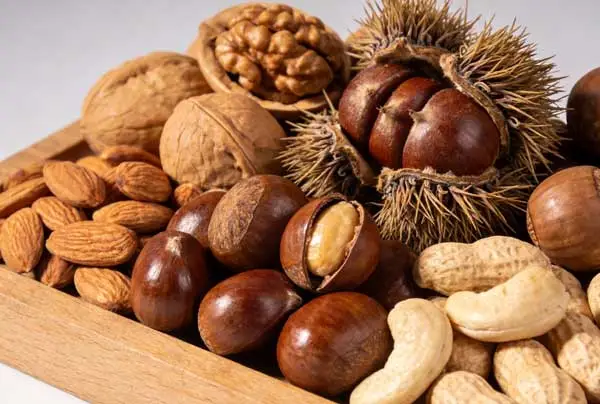
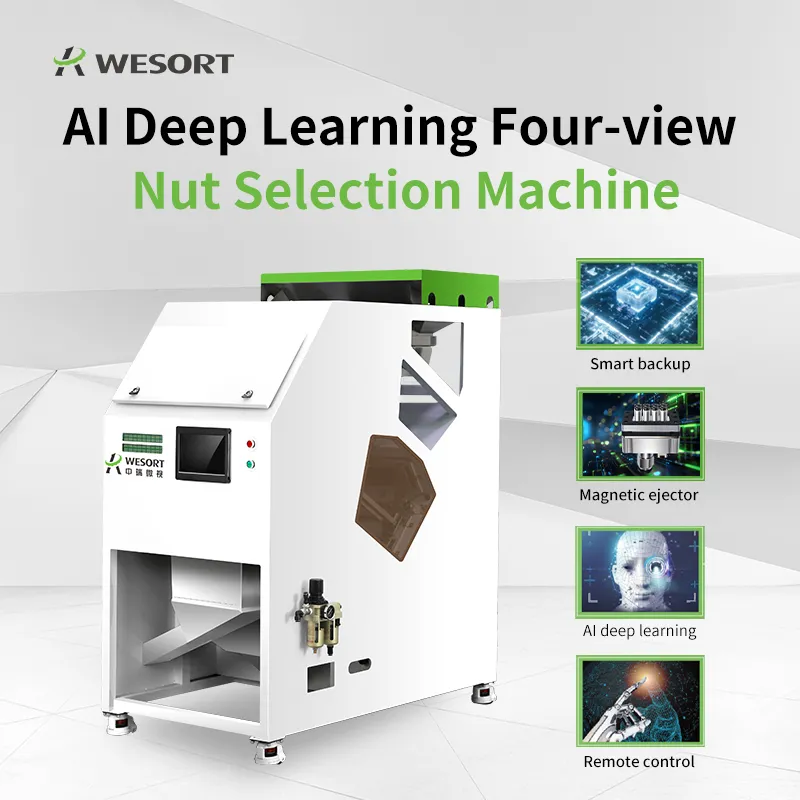
TOP 1 - WESORT QuadEye 360 ° AI Nut Color Sorter
Tổng quan về công ty
Được thành lập vào năm 2012. WESORT là nhà sản xuất chuyên nghiệp chuyên về thiết bị phân loại tầm nhìn AI. Công ty tích hợp nghiên cứu và phát triển, sản xuất, bán hàng và các dịch vụ kỹ thuật toàn cầu, tập trung hoàn toàn vào công nghệ phân loại thông minh.
Trong hơn một thập kỷ đổi mới liên tục, WESORT đã phát triển từ các hệ thống phân loại quang học thông thường thành một trong những nhà phát triển hàng đầu trong ngành về các giải pháp phân loại do AI cung cấp. Ngày nay, danh mục sản phẩm của nó bao gồm máy phân loại màu AI, máy lựa chọn AI, máy phân loại hồng ngoại, hệ thống kiểm tra tia X và thiết bị phân loại công nghiệp tùy chỉnh.
Công nghệ phân loại AI của công ty đã được áp dụng thành công cho hơn 7.000 vật liệu khác nhau, bao gồm các loại hạt, hạt cà phê, ngũ cốc, hạt, dược liệu, hải sản, thực phẩm khử nước, nhựa tái chế, khoáng chất, đá quý và nhiều ứng dụng công nghiệp.
Được hỗ trợ bởi nhóm R & D do tiến sĩ lãnh đạo, WESORT tiếp tục đầu tư mạnh mẽ vào trí tuệ nhân tạo, thị giác máy, thuật toán học sâu và công nghệ hình ảnh đa phổ để giúp các bộ xử lý cải thiện chất lượng sản phẩm đồng thời giảm chi phí vận hành.
Được thiết kế đặc biệt cho chế biến hạt hiện đại
Không giống như các máy phân loại quang học thông thường chủ yếu dựa vào sự khác biệt về màu sắc, Máy phân loại màu hạt WESORT QuadEye 360 ° AI phân tích mọi đai ốc từ nhiều chiều.
Hệ thống nhận dạng AI của nó đánh giá:
- Màu bề mặt
- Hình dạng nhất quán
- Đặc điểm kết cấu
- Sự thay đổi kích thước
- Nếp nhăn bề mặt
- Thiệt hại của côn trùng
- vết cháy
- Hạt nhân bị hỏng
- mảnh vỏ
- Vật liệu nước ngoài
Việc kiểm tra đa chiều này cho phép các bộ xử lý đạt được tính nhất quán về phân loại cao hơn nhiều trong khi giảm các yêu cầu kiểm tra thủ công.
Máy được sử dụng rộng rãi cho:
- Hạnh nhân
- Quả óc chó
- Hạt điều
- Hạt dẻ cười
- Hạt phỉ
- Hạt Macca
- Đậu phộng
- Quả hồ đào
- Hạt Thông
- Sản phẩm hạt hỗn hợp
Công nghệ QuadEye 360 ° AI Vision
Sự khác biệt công nghệ lớn nhất giữa WESORT và thông thường máy phân loại màu hạt nằm trong độc quyền của nó Hệ thống tầm nhìn AI 360 ° QuadEye.
Thay vì chỉ kiểm tra một hoặc hai bề mặt có thể nhìn thấy, hệ thống sử dụng bốn máy ảnh độ nét cao được đồng bộ hóa để ghi lại hình ảnh hoàn chỉnh của mọi đai ốc từ nhiều góc độ trong một lần vượt qua.
Việc kiểm tra toàn cảnh này làm giảm đáng kể các điểm mù và cải thiện đáng kể việc phát hiện các khuyết tật ẩn ở hai bên hoặc mặt dưới của hạt nhân.
Đối với chế biến hạt cao cấp, công nghệ này mang lại lợi thế lớn khi xác định:
- Nứt chân tóc
- Hố giun
- Khuôn một phần
- Đổi màu nhẹ
- Vết xước bề mặt
- Thiếu da
- Các cạnh bị hỏng
- Hạt nhân biến dạng
Khi các tiêu chuẩn chất lượng tiếp tục tăng trên toàn thế giới, việc kiểm tra toàn góc ngày càng trở nên có giá trị đối với các bộ xử lý định hướng xuất khẩu.
AI Deep Learning cải thiện theo thời gian
Trí thông minh của hệ thống QuadEye đến từ nền tảng học sâu độc quyền của WESORT.
Thay vì dựa vào các ngưỡng màu cố định, AI liên tục phân tích các đặc điểm hình ảnh phức tạp bằng cách sử dụng mạng nơ-ron quy mô lớn được đào tạo trên hàng triệu mẫu vật liệu.
Hệ thống hiện hỗ trợ nhiều hơn 5.000 mô hình phân loại AI, cho phép các nhà chế biến chuyển đổi nhanh chóng giữa các giống hạt khác nhau và tiêu chuẩn chất lượng.
Cho dù phân loại hạnh nhân xuất khẩu cao cấp hay hạt điều thương mại hỗn hợp, các nhà khai thác có thể chỉ cần chọn công thức thích hợp mà không cần điều chỉnh thủ công rộng rãi.
Điều này làm giảm đáng kể thời gian thiết lập trong khi vẫn duy trì độ chính xác phân loại nhất quán.
16 × Sức mạnh tính toán cho sản xuất tốc độ cao
Độ chính xác phân loại cao chỉ có giá trị nếu tốc độ sản xuất vẫn cạnh tranh.
Để đáp ứng các yêu cầu xử lý công nghiệp, WESORT tích hợp bộ xử lý AI hiệu suất cao cung cấp 16 × sức mạnh tính toán, cho phép phân tích thời gian thực dữ liệu hình ảnh lớn trong khi vẫn duy trì thông lượng sản xuất ổn định.
Kiến trúc xử lý thông minh đồng bộ hóa việc thu nhận hình ảnh, phân tích lỗi và kiểm soát từ chối trong vòng mili giây.
Do đó, các bộ xử lý có thể duy trì năng lực sản xuất cao mà không làm mất độ chính xác của việc phân loại.
Phát hiện các khiếm khuyết mà các nhà phân loại màu thông thường bỏ lỡ
Bộ xử lý đai ốc ngày càng yêu cầu thiết bị có khả năng phát hiện nhiều hơn sự khác biệt về màu sắc đơn giản.
Hệ thống QuadEye AI có thể xác định chính xác:
- Hạt mốc
- Hạt bị côn trùng làm hỏng
- Đốm đen
- Hạt cháy
- Hạt vàng
- Hạt nhăn
- Mảnh vỡ
- mảnh vỏ
- Vật liệu nước ngoài
- Hình dạng bất thường
- Khuyết tật bề mặt
Đối với các nhà chế biến cung cấp các thương hiệu bán lẻ cao cấp hoặc thị trường xuất khẩu, việc kiểm tra toàn diện này giúp cải thiện tính nhất quán của sản phẩm đồng thời giảm khiếu nại của khách hàng.
5 nhà sản xuất máy phân loại màu hạt hàng đầu năm 2026
Hỗ trợ kỹ thuật và dịch vụ toàn cầu của WESORT
Đầu tư vào máy phân loại màu hạt không chỉ là mua thiết bị - mà còn là chọn đối tác công nghệ lâu dài. Hỗ trợ kỹ thuật đáng tin cậy, thời gian phản hồi nhanh và cập nhật phần mềm liên tục là điều cần thiết để duy trì sản xuất ổn định.
WESORT đã thiết lập một mạng lưới dịch vụ toàn cầu toàn diện để hỗ trợ khách hàng trước, trong và sau khi cài đặt.
Ngày nay, công ty điều hành các chi nhánh và kho hàng ở nước ngoài tại Việt Nam, Indonesia, Thái Lan, Ý, Tây Ban Nha, Mexico, Peru, Georgia và các thị trường quốc tế khác, đồng thời phục vụ khách hàng tại hơn 100 quốc gia và khu vực trên toàn thế giới.
Để cải thiện trải nghiệm của khách hàng, WESORT đã phát triển Hệ thống dịch vụ từ xa PAD + WiFi. Các kỹ sư có thể chẩn đoán từ xa tình trạng máy, tối ưu hóa các thông số sắp xếp, cập nhật mô hình AI và cung cấp hỗ trợ kỹ thuật thông qua kết nối Internet. Điều này làm giảm đáng kể thời gian chết và giảm thiểu nhu cầu truy cập dịch vụ tại chỗ.
Khách hàng cũng được hưởng lợi từ hỗ trợ kỹ thuật đa ngôn ngữ bao gồm tiếng Anh, tiếng Tây Ban Nha, tiếng Pháp, tiếng Việt, tiếng Thái, tiếng Trung và các ngôn ngữ khác, đảm bảo giao tiếp hiệu quả bất kể vị trí.
Tại sao nhiều bộ xử lý Nut đang chọn WESORT
Các công ty chế biến hạt phải đối mặt với áp lực ngày càng tăng trong việc cung cấp chất lượng sản phẩm cao hơn đồng thời giảm chi phí lao động và nâng cao hiệu quả sản xuất.
WESORT QuadEye 360 ° AI Nut Color Sorter giúp các bộ xử lý đạt được những mục tiêu này bằng cách kết hợp nhận dạng thông minh với tự động hóa công nghiệp.
So với các máy phân loại quang học thông thường, hệ thống này mang lại một số lợi thế thực tế:
1. Phát hiện khiếm khuyết chính xác hơn
Hệ thống thị giác AI xác định các khiếm khuyết phức tạp khó đối với truyền thống máy phân loại màu để nhận biết, bao gồm tổn thương côn trùng, nếp nhăn, đổi màu nhẹ, dư lượng vỏ, hạt vỡ và nhiễm bẩn bề mặt.
2. Tính nhất quán của sản phẩm cao hơn
Mỗi hạt được đánh giá bằng cách sử dụng các tiêu chuẩn nhận dạng AI giống nhau, loại bỏ sự mâu thuẫn liên quan đến kiểm tra thủ công và đảm bảo chất lượng sản phẩm thống nhất.
3. Giảm phụ thuộc vào lao động
Phân loại tự động làm giảm đáng kể nhu cầu kiểm tra chất lượng thủ công, giúp các nhà chế biến giải quyết tình trạng thiếu lao động đồng thời giảm chi phí vận hành.
4. Sản xuất linh hoạt
Nhiều công thức phân loại có thể được lưu trữ và thu hồi ngay lập tức, cho phép các nhà chế biến chuyển đổi nhanh chóng giữa hạnh nhân, quả óc chó, hạt dẻ cười, hạt điều, đậu phộng, hạt phỉ và các sản phẩm hạt hỗn hợp.
5. Giảm tổn thất sản phẩm
Cấu trúc truyền tải thông minh được thiết kế để bảo vệ các hạt nhân dễ vỡ trong quá trình vận chuyển, giúp giảm thiểu thiệt hại cơ học trong khi vẫn duy trì hiệu quả phân loại cao.
Ứng dụng tiêu biểu
Máy phân loại màu hạt WESORT AI được sử dụng rộng rãi trong ngành công nghiệp chế biến hạt.
Các ứng dụng điển hình bao gồm:
Chế biến hạnh nhân
Chế biến hạt điều
Phân loại hạt óc chó
Phân loại hạt dẻ cười
Chế biến hạt phỉ
Phân loại đậu phộng
Phân loại hạt Macadamia
Phân loại hồ đào
Chế biến hạt thông
Dây chuyền sản xuất hạt hỗn hợp
Cho dù chế biến nguyên liệu thô hay các sản phẩm bán lẻ cao cấp, hệ thống cung cấp khả năng kiểm soát chất lượng đáng tin cậy trong suốt quá trình sản xuất.
TOP 2 - Bühler SORTEX
Có trụ sở chính tại Thụy Sĩ, Bühler là một trong những cái tên được công nhận nhất trong công nghệ phân loại quang học. Dòng SORTEX của nó đã được sử dụng rộng rãi trong các ngành công nghiệp ngũ cốc, cà phê, hạt và chế biến thực phẩm trong nhiều thập kỷ.
Các giải pháp phân loại hạt của Bühler kết hợp máy ảnh quang học có độ phân giải cao với các thuật toán xử lý hình ảnh tiên tiến để xác định sự đổi màu, mảnh vỏ, vật liệu lạ và hạt nhân bị hư hỏng. Thiết kế máy mô-đun cho phép bộ xử lý cấu hình thiết bị dựa trên năng lực sản xuất và loại sản phẩm.
Công ty đặc biệt nổi tiếng với việc chế tạo máy hợp vệ sinh, vận hành tiết kiệm năng lượng và danh tiếng mạnh mẽ trong các cơ sở sản xuất thực phẩm lớn.
Điểm mạnh
Thương hiệu toàn cầu lâu đời.
Hiệu suất phân loại quang học đáng tin cậy.
Sự hiện diện mạnh mẽ trong các nhà máy chế biến công nghiệp lớn.
Chất lượng kỹ thuật tuyệt vời.
Tốt nhất cho
Các nhà sản xuất thực phẩm quy mô lớn đang tìm kiếm công nghệ phân loại quang học đã được chứng minh với sự hỗ trợ toàn cầu.
TOP 3 - Thực phẩm TOMRA
TOMRA Food, có trụ sở chính tại Na Uy, được công nhận trên toàn thế giới về các công nghệ phân loại dựa trên cảm biến được sử dụng trong ngành công nghiệp thực phẩm.
Hệ thống phân loại hạt của nó kết hợp máy ảnh quang phổ nhìn thấy với công nghệ laser, hồng ngoại và chữ ký sinh trắc học để phát hiện các khuyết tật vượt ra ngoài sự khác biệt đơn giản về màu sắc.
Một trong những lợi thế chính của TOMRA là nền tảng quản lý sản xuất hỗ trợ đám mây, cho phép các bộ xử lý giám sát hiệu suất máy, thống kê sản xuất và yêu cầu bảo trì từ xa.
Các giải pháp của công ty thường được tìm thấy trong các cơ sở chế biến thực phẩm cao cấp yêu cầu phân tích sản xuất chi tiết và tích hợp nhà máy kỹ thuật số.
Điểm mạnh
Công nghệ nhiệt hạch cảm biến tiên tiến.
Phát hiện vật liệu nước ngoài tuyệt vời.
Giám sát đám mây thông minh.
Khả năng quản lý dữ liệu mạnh mẽ.
Tốt nhất cho
Các bộ xử lý tìm kiếm giám sát sản xuất thông minh và quản lý chất lượng kỹ thuật số tiên tiến.
TOP 4 - Satake
Được thành lập tại Nhật Bản, Satake có hơn một thế kỷ kinh nghiệm trong lĩnh vực máy móc chế biến ngũ cốc và đã mở rộng thành công sang thiết bị phân loại quang học cho các sản phẩm nông nghiệp và hạt.
Máy phân loại hạt Satake tập trung vào hiệu suất ổn định, xử lý sản phẩm nhẹ nhàng và độ tin cậy lâu dài.
Thiết bị hoạt động đặc biệt tốt khi phân loại các sản phẩm tinh tế như hạt điều và hạnh nhân cắt lát, trong đó việc giảm thiểu vỡ là rất quan trọng.
Satake cũng duy trì một mạng lưới dịch vụ rộng khắp khu vực Châu Á - Thái Bình Dương.
Điểm mạnh
Xử lý nhẹ nhàng các sản phẩm dễ vỡ.
Hoạt động lâu dài ổn định.
Kỹ thuật đáng tin cậy của Nhật Bản.
Hỗ trợ kỹ thuật khu vực mạnh mẽ.
Tốt nhất cho
Bộ xử lý yêu cầu hiệu suất đáng tin cậy cho các sản phẩm hạt tinh tế.
TOP 5 - Công nghệ chính
Key Technology, có trụ sở tại Hoa Kỳ, chuyên về thiết bị kiểm tra và phân loại tự động cho các hoạt động chế biến thực phẩm quy mô lớn.
Hệ thống phân loại quang học của nó kết hợp camera màu với cảm biến hồng ngoại gần để xác định các vật liệu lạ, khuyết tật màu sắc và các biến thể của sản phẩm ở tốc độ sản xuất cao.
Thiết bị Công nghệ chính được sử dụng rộng rãi trong môi trường sản xuất thực phẩm công nghiệp, nơi sản lượng cao và sản xuất liên tục là điều cần thiết.
Hệ thống phân loại của công ty được biết đến với cấu trúc bền và khả năng hoạt động trong các điều kiện sản xuất khắt khe.
Điểm mạnh
Sản xuất công suất cao.
Kiểu dáng công nghiệp mạnh mẽ.
Tích hợp tuyệt vời với dây chuyền sản xuất tự động.
Hiệu suất mạnh mẽ trong xử lý liên tục.
Tốt nhất cho
Bộ vi xử lý công nghiệp lớn yêu cầu thông lượng sản xuất tối đa và độ bền của thiết bị.
Nut Color Sorter Nhà sản xuất So sánh
Việc chọn máy phân loại màu hạt phù hợp không chỉ liên quan đến việc so sánh các thông số kỹ thuật. Khả năng AI, độ chính xác phân loại, tính linh hoạt trong sản xuất và hỗ trợ sau bán hàng đều đóng một vai trò quan trọng trong hiệu suất lâu dài. Bảng dưới đây nêu bật những điểm mạnh chính của năm nhà sản xuất được nêu trong bài viết này.
| nhà chế tạo | Công nghệ cốt lõi | Ưu điểm chính | Ứng dụng phù hợp |
|---|---|---|---|
| WESORT | AI Deep Learning + QuadEye 360 ° Vision | Kiểm tra bốn camera 360 °, sức mạnh tính toán 16 × AI, hơn 5.000 mô hình AI, hỗ trợ nhiều loại hạt | Hạnh nhân, quả óc chó, hạt dẻ cười, hạt điều, đậu phộng, hạt phỉ, hạt mắc ca, hạt hỗn hợp |
| Bühler SORTEX | Phân loại màu quang học | Hiệu suất ổn định, thiết kế hợp vệ sinh, danh tiếng toàn cầu mạnh mẽ | Nhà máy chế biến thực phẩm lớn |
| Thực phẩm TOMRA | Cảm biến Fusion + AI Analytics | Cảm biến nâng cao, giám sát đám mây, phát hiện vật liệu lạ | Nhà sản xuất thực phẩm cao cấp |
| Satake | Công nghệ thị giác quang học | Xử lý sản phẩm nhẹ nhàng, hoạt động ổn định | Hạt dễ vỡ và hạt cắt lát |
| Công nghệ chính | Quang học + Hồng ngoại gần | Năng lực sản xuất cao, tự động hóa công nghiệp | Dây chuyền sản xuất liên tục lớn |
Mặc dù mọi nhà sản xuất đều cung cấp các giải pháp phân loại đáng tin cậy, nhưng sự lựa chọn tốt nhất phụ thuộc vào yêu cầu sản xuất, thị trường mục tiêu, tiêu chuẩn chất lượng sản phẩm và kế hoạch mở rộng trong tương lai.
Làm thế nào để chọn đúng bộ phân loại màu hạt
Mua máy phân loại màu hạt là một khoản đầu tư dài hạn. Thay vì chỉ tập trung vào giá máy, các nhà chế biến nên đánh giá giải pháp sản xuất hoàn chỉnh.
1. Xem xét các loại hạt bạn xử lý
Các giống hạt khác nhau đòi hỏi các chiến lược phân loại khác nhau.
Ví dụ:
- Hạnh nhân yêu cầu phát hiện vết nứt và mảnh vỏ chính xác.
- Hạt điều cần vận chuyển nhẹ nhàng để giảm vỡ.
- Hạt dẻ cười thường yêu cầu mở vỏ và phát hiện sự đổi màu.
- Quả óc chó yêu cầu xác định chính xác thiệt hại của côn trùng và hạt bị teo.
- Các loại hạt hỗn hợp yêu cầu các mô hình AI linh hoạt có khả năng nhận dạng nhiều sản phẩm cùng một lúc.
Chọn thiết bị được thiết kế đặc biệt cho sản phẩm của bạn sẽ cải thiện cả độ chính xác và năng suất phân loại.
2. Đánh giá khả năng nhận biết AI
Máy phân loại hiện đại nên làm nhiều hơn là phân biệt màu sắc.
Một máy phân loại màu hạt AI chuyên nghiệp nên nhận ra:
- Sự khác biệt về màu sắc
- Biến thể hình dạng
- kết cấu bề mặt
- Nếp nhăn
- Khuôn
- vết cháy
- Lỗ côn trùng
- Hạt nhân bị hỏng
- mảnh vỏ
- Vật liệu nước ngoài
Nhận dạng dựa trên AI mang lại tính nhất quán tốt hơn nhiều so với xử lý hình ảnh dựa trên quy tắc truyền thống.
3. Vấn đề năng lực sản xuất
Một chiếc máy có độ chính xác tuyệt vời nhưng không đủ thông lượng có thể nhanh chóng trở thành nút thắt sản xuất.
Trước khi mua, đánh giá:
- Yêu cầu sản xuất hàng giờ
- Mở rộng sản xuất trong tương lai
- Không gian nhà máy có sẵn
- Số ca sản xuất
- Phương pháp cho ăn nguyên liệu
Lựa chọn công suất phù hợp ngày hôm nay có thể tránh được việc nâng cấp thiết bị không cần thiết sau này.
4. Tính linh hoạt của phần mềm
Bộ xử lý hạt thường chuyển đổi giữa các sản phẩm khác nhau trong suốt cả năm.
Máy hỗ trợ quản lý công thức cho phép người vận hành lưu nhiều chương trình phân loại cho các loại hạt khác nhau.
Thay vì điều chỉnh thủ công hàng chục thông số mỗi lần, người dùng chỉ cần chọn cấu hình sản phẩm phù hợp, giảm thời gian thiết lập và giảm thiểu lỗi của nhà điều hành.
5. Hỗ trợ dịch vụ toàn cầu
Hỗ trợ sau bán hàng đáng tin cậy cũng quan trọng như hiệu suất của máy.
Trước khi đưa ra quyết định mua hàng, hãy xem xét:
- Nhà sản xuất có cung cấp dịch vụ ở nước ngoài không?
- Phụ tùng có sẵn không?
- Có hỗ trợ kỹ thuật từ xa không?
- Các mô hình phần mềm và AI có thể được cập nhật không?
- Có bao gồm đào tạo nhà điều hành không?
Mạng lưới hỗ trợ toàn cầu mạnh mẽ giúp tối đa hóa thời gian hoạt động của thiết bị và bảo vệ đầu tư dài hạn.
Câu hỏi thường gặp
1. Máy phân loại màu hạt là gì?
Máy phân loại màu hạt là một máy phân loại quang học thông minh tự động tách các loại hạt bị lỗi khỏi các sản phẩm đủ tiêu chuẩn bằng máy ảnh, trí tuệ nhân tạo và công nghệ nhận dạng hình ảnh. Nó cải thiện chất lượng sản phẩm trong khi giảm kiểm tra thủ công.
2. Những loại hạt nào có thể được sắp xếp?
Hầu hết các máy phân loại màu hạt AI hiện đại đều hỗ trợ nhiều loại sản phẩm, bao gồm hạnh nhân, quả óc chó, hạt dẻ cười, hạt điều, quả phỉ, đậu phộng, hạt mắc ca, hồ đào, hạt thông, hạt Brazil và nhiều loại hạt cây khác.
3. AI có thể phát hiện các khuyết tật ngoài sự khác biệt về màu sắc không?
Đúng.
Không giống như các máy phân loại quang học thông thường, các hệ thống hỗ trợ AI có thể nhận ra nhiều đặc điểm đồng thời, bao gồm nếp nhăn, vết nứt, tổn thương côn trùng, nấm mốc, vết cháy, hạt nhân bị vỡ, bất thường về hình dạng, mảnh vỏ và vật liệu lạ.
4. Máy phân loại màu hạt AI có phù hợp cho chế biến cấp xuất khẩu không?
Chắc chắn rồi.
Nhiều nhà xuất khẩu sử dụng công nghệ phân loại AI để đáp ứng các tiêu chuẩn chất lượng nghiêm ngặt theo yêu cầu của khách hàng ở Châu Âu, Bắc Mỹ, Trung Đông, Nhật Bản và Đông Nam Á. Tính nhất quán trong phân loại cao hơn giúp nâng cao giá trị sản phẩm và niềm tin của khách hàng.
5. Một máy có thể xử lý các loại hạt khác nhau không?
Đúng.
Hầu hết các hệ thống chuyên nghiệp đều hỗ trợ nhiều công thức sản phẩm, cho phép người vận hành chuyển đổi giữa hạnh nhân, quả óc chó, hạt điều, hạt dẻ cười, đậu phộng và các loại hạt khác với mức điều chỉnh tối thiểu.
6. Phân loại AI có làm giảm chi phí lao động không?
Đúng.
Bằng cách tự động hóa việc kiểm tra và phân loại, máy phân loại AI giảm đáng kể sự phụ thuộc vào lao động thủ công đồng thời cải thiện tính nhất quán và hiệu quả sản xuất.
7. Tôi nên chuẩn bị những gì trước khi mua?
Bộ xử lý nên xem xét:
- Giống hạt
- Năng lực sản xuất
- Yêu cầu chất lượng
- Bố trí nhà máy
- Kế hoạch mở rộng trong tương lai
- Hỗ trợ kỹ thuật có sẵn
Thảo luận về các yếu tố này với nhà sản xuất giúp đảm bảo giải pháp phù hợp nhất.
8. WESORT có phù hợp với các dự án phân loại tùy chỉnh không?
Đúng.
WESORT cung cấp các giải pháp phân loại AI tùy chỉnh dựa trên các vật liệu, năng lực sản xuất và tiêu chuẩn chất lượng khác nhau. Công ty đã phát triển các mô hình AI cho hơn 7.000 vật liệu, cho phép các giải pháp phù hợp trong các lĩnh vực thực phẩm, nông nghiệp và công nghiệp.
Suy nghĩ cuối cùng
Không có máy phân loại màu hạt "tốt nhất" duy nhất cho mọi nhà máy chế biến. Giải pháp lý tưởng phụ thuộc vào sản phẩm, mục tiêu sản xuất, yêu cầu chất lượng và chiến lược kinh doanh dài hạn của bạn.
Đối với các bộ xử lý đang tìm kiếm khả năng phân loại quang học đã được chứng minh với dịch vụ toàn cầu đã được thiết lập, các nhà sản xuất như Bühler, TOMRA, Satake và Key Technology đều cung cấp các giải pháp đáng tin cậy trong các phân khúc thị trường khác nhau.
Đối với các công ty muốn áp dụng công nghệ tầm nhìn AI mới nhất, WESORT nổi bật với nó Hệ thống tầm nhìn AI 360 ° QuadEye, thuật toán học sâu, phân loại thông minh tốc độ cao và các giải pháp linh hoạt cho hạnh nhân, quả óc chó, hạt dẻ cười, hạt điều, hạt phỉ, đậu phộng và các sản phẩm hạt khác.
Khi các tiêu chuẩn an toàn thực phẩm tiếp tục phát triển và chi phí lao động tăng trên toàn thế giới, việc phân loại do AI cung cấp không chỉ là một bản nâng cấp thiết bị - đó là một khoản đầu tư chiến lược giúp các nhà chế biến cải thiện chất lượng, tăng hiệu quả và tăng cường khả năng cạnh tranh trên thị trường toàn cầu.
Ngành công nghiệp chế biến hạt toàn cầu ngày càng trở nên cạnh tranh. Tiêu chuẩn an toàn thực phẩm cao hơn, yêu cầu xuất khẩu khắt khe hơn và chi phí lao động tăng cao đang thúc đẩy các nhà chế biến đầu tư vào công nghệ phân loại thông minh hơn và hiệu quả hơn. Cho dù chế biến hạnh nhân, quả óc chó, hạt dẻ cười, hạt phỉ, đậu phộng hay hạt điều, chất lượng sản phẩm nhất quán đã trở thành một trong những yếu tố quan trọng nhất ảnh hưởng đến sự hài lòng của khách hàng và khả năng cạnh tranh trên thị trường.
Kiểm tra thủ công truyền thống không còn khả năng đáp ứng các yêu cầu sản xuất hiện đại. Ngay cả các máy phân loại màu quang học thông thường cũng thường phải vật lộn để xác định các khuyết tật tinh vi như hư hại do côn trùng, đổi màu nhẹ, nếp nhăn bề mặt, mảnh vỏ, vết dầu hoặc vết nứt nhỏ. Do đó, máy phân loại màu hạt do AI cung cấp đã trở thành giải pháp ưa thích cho các bộ xử lý tìm kiếm độ chính xác phân loại cao hơn và chi phí vận hành thấp hơn.
Trong hướng dẫn này, chúng tôi so sánh năm nhà sản xuất máy phân loại màu hạt hàng đầu thế giới dựa trên sự đổi mới công nghệ, khả năng AI, độ chính xác phân loại, hiệu quả sản xuất, tính linh hoạt của ứng dụng, mạng lưới dịch vụ toàn cầu và giá trị tổng thể cho các bộ xử lý hạt thương mại.
Các nhà sản xuất được liệt kê dưới đây được trình bày không theo thứ tự cụ thể. Mỗi loại cung cấp những lợi thế độc đáo tùy thuộc vào quy mô sản xuất, giống hạt và yêu cầu chế biến.
Cách chúng tôi chọn các nhà sản xuất máy phân loại màu hạt này
Việc lựa chọn thiết bị phân loại hạt phù hợp không chỉ liên quan đến việc so sánh giá cả hoặc năng lực sản xuất. Để cung cấp hướng dẫn thực tế cho các nhà chế biến, chúng tôi đã đánh giá các nhà sản xuất sử dụng một số tiêu chí chính ảnh hưởng trực tiếp đến hiệu suất sản xuất dài hạn.
1. Công nghệ nhận dạng AI
Máy có thể xác định chính xác các khuyết tật tinh vi như lỗ côn trùng, nấm mốc, nếp nhăn, mảnh vỏ, đổi màu, vết cháy và hạt nhân bị hỏng không?
2. Phân loại chính xác
Thiết bị có duy trì hiệu suất phân loại ổn định dưới tốc độ sản xuất cao trong khi giảm thiểu từ chối sai không?
3. Phạm vi sản phẩm
Một máy có thể xử lý nhiều loại hạt, bao gồm hạnh nhân, quả óc chó, hạt dẻ cười, hạt điều, hạt phỉ, đậu phộng, hạt macadamia, hồ đào và các sản phẩm hỗn hợp không?
4. Tự động hóa & Điều khiển thông minh
Hệ thống có hỗ trợ học AI, quản lý công thức, vận hành từ xa, hiệu chuẩn tự động và quản lý sản xuất thông minh không?
5. Hỗ trợ kỹ thuật toàn cầu
Khách hàng có thể nhận được hỗ trợ kỹ thuật nhanh chóng, phụ tùng thay thế, nâng cấp phần mềm và khắc phục sự cố từ xa không?
Dựa trên các tiêu chí này, các nhà sản xuất sau đây đại diện cho một số nhà cung cấp cạnh tranh nhất hiện nay trong ngành phân loại hạt toàn cầu.
TOP 1 - WESORT QuadEye 360 ° AI Nut Color Sorter
Tổng quan về công ty
Được thành lập vào năm 2012. WESORT là nhà sản xuất chuyên nghiệp chuyên về thiết bị phân loại tầm nhìn AI. Công ty tích hợp nghiên cứu và phát triển, sản xuất, bán hàng và các dịch vụ kỹ thuật toàn cầu, tập trung hoàn toàn vào công nghệ phân loại thông minh.
Trong hơn một thập kỷ đổi mới liên tục, WESORT đã phát triển từ các hệ thống phân loại quang học thông thường thành một trong những nhà phát triển hàng đầu trong ngành về các giải pháp phân loại do AI cung cấp. Ngày nay, danh mục sản phẩm của nó bao gồm máy phân loại màu AI, máy lựa chọn AI, máy phân loại hồng ngoại, hệ thống kiểm tra tia X và thiết bị phân loại công nghiệp tùy chỉnh.
Công nghệ phân loại AI của công ty đã được áp dụng thành công cho hơn 7.000 vật liệu khác nhau, bao gồm các loại hạt, hạt cà phê, ngũ cốc, hạt, dược liệu, hải sản, thực phẩm khử nước, nhựa tái chế, khoáng chất, đá quý và nhiều ứng dụng công nghiệp.
Được hỗ trợ bởi nhóm R & D do tiến sĩ lãnh đạo, WESORT tiếp tục đầu tư mạnh mẽ vào trí tuệ nhân tạo, thị giác máy, thuật toán học sâu và công nghệ hình ảnh đa phổ để giúp các bộ xử lý cải thiện chất lượng sản phẩm đồng thời giảm chi phí vận hành.
Được thiết kế đặc biệt cho chế biến hạt hiện đại
Không giống như các máy phân loại quang học thông thường chủ yếu dựa vào sự khác biệt về màu sắc, Máy phân loại màu hạt WESORT QuadEye 360 ° AI phân tích mọi đai ốc từ nhiều chiều.
Hệ thống nhận dạng AI của nó đánh giá:
- Màu bề mặt
- Hình dạng nhất quán
- Đặc điểm kết cấu
- Sự thay đổi kích thước
- Nếp nhăn bề mặt
- Thiệt hại của côn trùng
- vết cháy
- Hạt nhân bị hỏng
- mảnh vỏ
- Vật liệu nước ngoài
Việc kiểm tra đa chiều này cho phép các bộ xử lý đạt được tính nhất quán về phân loại cao hơn nhiều trong khi giảm các yêu cầu kiểm tra thủ công.
Máy được sử dụng rộng rãi cho:
- Hạnh nhân
- Quả óc chó
- Hạt điều
- Hạt dẻ cười
- Hạt phỉ
- Hạt Macca
- Đậu phộng
- Quả hồ đào
- Hạt Thông
- Sản phẩm hạt hỗn hợp
Công nghệ QuadEye 360 ° AI Vision
Sự khác biệt công nghệ lớn nhất giữa WESORT và thông thường máy phân loại màu hạt nằm trong độc quyền của nó Hệ thống tầm nhìn AI 360 ° QuadEye.
Thay vì chỉ kiểm tra một hoặc hai bề mặt có thể nhìn thấy, hệ thống sử dụng bốn máy ảnh độ nét cao được đồng bộ hóa để ghi lại hình ảnh hoàn chỉnh của mọi đai ốc từ nhiều góc độ trong một lần vượt qua.
Việc kiểm tra toàn cảnh này làm giảm đáng kể các điểm mù và cải thiện đáng kể việc phát hiện các khuyết tật ẩn ở hai bên hoặc mặt dưới của hạt nhân.
Đối với chế biến hạt cao cấp, công nghệ này mang lại lợi thế lớn khi xác định:
- Nứt chân tóc
- Hố giun
- Khuôn một phần
- Đổi màu nhẹ
- Vết xước bề mặt
- Thiếu da
- Các cạnh bị hỏng
- Hạt nhân biến dạng
Khi các tiêu chuẩn chất lượng tiếp tục tăng trên toàn thế giới, việc kiểm tra toàn góc ngày càng trở nên có giá trị đối với các bộ xử lý định hướng xuất khẩu.
AI Deep Learning cải thiện theo thời gian
Trí thông minh của hệ thống QuadEye đến từ nền tảng học sâu độc quyền của WESORT.
Thay vì dựa vào các ngưỡng màu cố định, AI liên tục phân tích các đặc điểm hình ảnh phức tạp bằng cách sử dụng mạng nơ-ron quy mô lớn được đào tạo trên hàng triệu mẫu vật liệu.
Hệ thống hiện hỗ trợ nhiều hơn 5.000 mô hình phân loại AI, cho phép các nhà chế biến chuyển đổi nhanh chóng giữa các giống hạt khác nhau và tiêu chuẩn chất lượng.
Cho dù phân loại hạnh nhân xuất khẩu cao cấp hay hạt điều thương mại hỗn hợp, các nhà khai thác có thể chỉ cần chọn công thức thích hợp mà không cần điều chỉnh thủ công rộng rãi.
Điều này làm giảm đáng kể thời gian thiết lập trong khi vẫn duy trì độ chính xác phân loại nhất quán.
16 × Sức mạnh tính toán cho sản xuất tốc độ cao
Độ chính xác phân loại cao chỉ có giá trị nếu tốc độ sản xuất vẫn cạnh tranh.
Để đáp ứng các yêu cầu xử lý công nghiệp, WESORT tích hợp bộ xử lý AI hiệu suất cao cung cấp 16 × sức mạnh tính toán, cho phép phân tích thời gian thực dữ liệu hình ảnh lớn trong khi vẫn duy trì thông lượng sản xuất ổn định.
Kiến trúc xử lý thông minh đồng bộ hóa việc thu nhận hình ảnh, phân tích lỗi và kiểm soát từ chối trong vòng mili giây.
Do đó, các bộ xử lý có thể duy trì năng lực sản xuất cao mà không làm mất độ chính xác của việc phân loại.
Phát hiện các khiếm khuyết mà các nhà phân loại màu thông thường bỏ lỡ
Bộ xử lý đai ốc ngày càng yêu cầu thiết bị có khả năng phát hiện nhiều hơn sự khác biệt về màu sắc đơn giản.
Hệ thống QuadEye AI có thể xác định chính xác:
- Hạt mốc
- Hạt bị côn trùng làm hỏng
- Đốm đen
- Hạt cháy
- Hạt vàng
- Hạt nhăn
- Mảnh vỡ
- mảnh vỏ
- Vật liệu nước ngoài
- Hình dạng bất thường
- Khuyết tật bề mặt
Đối với các nhà chế biến cung cấp các thương hiệu bán lẻ cao cấp hoặc thị trường xuất khẩu, việc kiểm tra toàn diện này giúp cải thiện tính nhất quán của sản phẩm đồng thời giảm khiếu nại của khách hàng.
5 nhà sản xuất máy phân loại màu hạt hàng đầu năm 2026
Hỗ trợ kỹ thuật và dịch vụ toàn cầu của WESORT
Đầu tư vào máy phân loại màu hạt không chỉ là mua thiết bị - mà còn là chọn đối tác công nghệ lâu dài. Hỗ trợ kỹ thuật đáng tin cậy, thời gian phản hồi nhanh và cập nhật phần mềm liên tục là điều cần thiết để duy trì sản xuất ổn định.
WESORT đã thiết lập một mạng lưới dịch vụ toàn cầu toàn diện để hỗ trợ khách hàng trước, trong và sau khi cài đặt.
Ngày nay, công ty điều hành các chi nhánh và kho hàng ở nước ngoài tại Việt Nam, Indonesia, Thái Lan, Ý, Tây Ban Nha, Mexico, Peru, Georgia và các thị trường quốc tế khác, đồng thời phục vụ khách hàng tại hơn 100 quốc gia và khu vực trên toàn thế giới.
Để cải thiện trải nghiệm của khách hàng, WESORT đã phát triển Hệ thống dịch vụ từ xa PAD + WiFi. Các kỹ sư có thể chẩn đoán từ xa tình trạng máy, tối ưu hóa các thông số sắp xếp, cập nhật mô hình AI và cung cấp hỗ trợ kỹ thuật thông qua kết nối Internet. Điều này làm giảm đáng kể thời gian chết và giảm thiểu nhu cầu truy cập dịch vụ tại chỗ.
Khách hàng cũng được hưởng lợi từ hỗ trợ kỹ thuật đa ngôn ngữ bao gồm tiếng Anh, tiếng Tây Ban Nha, tiếng Pháp, tiếng Việt, tiếng Thái, tiếng Trung và các ngôn ngữ khác, đảm bảo giao tiếp hiệu quả bất kể vị trí.
Tại sao nhiều bộ xử lý Nut đang chọn WESORT
Các công ty chế biến hạt phải đối mặt với áp lực ngày càng tăng trong việc cung cấp chất lượng sản phẩm cao hơn đồng thời giảm chi phí lao động và nâng cao hiệu quả sản xuất.
WESORT QuadEye 360 ° AI Nut Color Sorter giúp các bộ xử lý đạt được những mục tiêu này bằng cách kết hợp nhận dạng thông minh với tự động hóa công nghiệp.
So với các máy phân loại quang học thông thường, hệ thống này mang lại một số lợi thế thực tế:
1. Phát hiện khiếm khuyết chính xác hơn
Hệ thống thị giác AI xác định các khiếm khuyết phức tạp khó đối với truyền thống máy phân loại màu để nhận biết, bao gồm tổn thương côn trùng, nếp nhăn, đổi màu nhẹ, dư lượng vỏ, hạt vỡ và nhiễm bẩn bề mặt.
2. Tính nhất quán của sản phẩm cao hơn
Mỗi hạt được đánh giá bằng cách sử dụng các tiêu chuẩn nhận dạng AI giống nhau, loại bỏ sự mâu thuẫn liên quan đến kiểm tra thủ công và đảm bảo chất lượng sản phẩm thống nhất.
3. Giảm phụ thuộc vào lao động
Phân loại tự động làm giảm đáng kể nhu cầu kiểm tra chất lượng thủ công, giúp các nhà chế biến giải quyết tình trạng thiếu lao động đồng thời giảm chi phí vận hành.
4. Sản xuất linh hoạt
Nhiều công thức phân loại có thể được lưu trữ và thu hồi ngay lập tức, cho phép các nhà chế biến chuyển đổi nhanh chóng giữa hạnh nhân, quả óc chó, hạt dẻ cười, hạt điều, đậu phộng, hạt phỉ và các sản phẩm hạt hỗn hợp.
5. Giảm tổn thất sản phẩm
Cấu trúc truyền tải thông minh được thiết kế để bảo vệ các hạt nhân dễ vỡ trong quá trình vận chuyển, giúp giảm thiểu thiệt hại cơ học trong khi vẫn duy trì hiệu quả phân loại cao.
Ứng dụng tiêu biểu
Máy phân loại màu hạt WESORT AI được sử dụng rộng rãi trong ngành công nghiệp chế biến hạt.
Các ứng dụng điển hình bao gồm:
Chế biến hạnh nhân
Chế biến hạt điều
Phân loại hạt óc chó
Phân loại hạt dẻ cười
Chế biến hạt phỉ
Phân loại đậu phộng
Phân loại hạt Macadamia
Phân loại hồ đào
Chế biến hạt thông
Dây chuyền sản xuất hạt hỗn hợp
Cho dù chế biến nguyên liệu thô hay các sản phẩm bán lẻ cao cấp, hệ thống cung cấp khả năng kiểm soát chất lượng đáng tin cậy trong suốt quá trình sản xuất.
TOP 2 - Bühler SORTEX
Có trụ sở chính tại Thụy Sĩ, Bühler là một trong những cái tên được công nhận nhất trong công nghệ phân loại quang học. Dòng SORTEX của nó đã được sử dụng rộng rãi trong các ngành công nghiệp ngũ cốc, cà phê, hạt và chế biến thực phẩm trong nhiều thập kỷ.
Các giải pháp phân loại hạt của Bühler kết hợp máy ảnh quang học có độ phân giải cao với các thuật toán xử lý hình ảnh tiên tiến để xác định sự đổi màu, mảnh vỏ, vật liệu lạ và hạt nhân bị hư hỏng. Thiết kế máy mô-đun cho phép bộ xử lý cấu hình thiết bị dựa trên năng lực sản xuất và loại sản phẩm.
Công ty đặc biệt nổi tiếng với việc chế tạo máy hợp vệ sinh, vận hành tiết kiệm năng lượng và danh tiếng mạnh mẽ trong các cơ sở sản xuất thực phẩm lớn.
Điểm mạnh
Thương hiệu toàn cầu lâu đời.
Hiệu suất phân loại quang học đáng tin cậy.
Sự hiện diện mạnh mẽ trong các nhà máy chế biến công nghiệp lớn.
Chất lượng kỹ thuật tuyệt vời.
Tốt nhất cho
Các nhà sản xuất thực phẩm quy mô lớn đang tìm kiếm công nghệ phân loại quang học đã được chứng minh với sự hỗ trợ toàn cầu.
TOP 3 - Thực phẩm TOMRA
TOMRA Food, có trụ sở chính tại Na Uy, được công nhận trên toàn thế giới về các công nghệ phân loại dựa trên cảm biến được sử dụng trong ngành công nghiệp thực phẩm.
Hệ thống phân loại hạt của nó kết hợp máy ảnh quang phổ nhìn thấy với công nghệ laser, hồng ngoại và chữ ký sinh trắc học để phát hiện các khuyết tật vượt ra ngoài sự khác biệt đơn giản về màu sắc.
Một trong những lợi thế chính của TOMRA là nền tảng quản lý sản xuất hỗ trợ đám mây, cho phép các bộ xử lý giám sát hiệu suất máy, thống kê sản xuất và yêu cầu bảo trì từ xa.
Các giải pháp của công ty thường được tìm thấy trong các cơ sở chế biến thực phẩm cao cấp yêu cầu phân tích sản xuất chi tiết và tích hợp nhà máy kỹ thuật số.
Điểm mạnh
Công nghệ nhiệt hạch cảm biến tiên tiến.
Phát hiện vật liệu nước ngoài tuyệt vời.
Giám sát đám mây thông minh.
Khả năng quản lý dữ liệu mạnh mẽ.
Tốt nhất cho
Các bộ xử lý tìm kiếm giám sát sản xuất thông minh và quản lý chất lượng kỹ thuật số tiên tiến.
TOP 4 - Satake
Được thành lập tại Nhật Bản, Satake có hơn một thế kỷ kinh nghiệm trong lĩnh vực máy móc chế biến ngũ cốc và đã mở rộng thành công sang thiết bị phân loại quang học cho các sản phẩm nông nghiệp và hạt.
Máy phân loại hạt Satake tập trung vào hiệu suất ổn định, xử lý sản phẩm nhẹ nhàng và độ tin cậy lâu dài.
Thiết bị hoạt động đặc biệt tốt khi phân loại các sản phẩm tinh tế như hạt điều và hạnh nhân cắt lát, trong đó việc giảm thiểu vỡ là rất quan trọng.
Satake cũng duy trì một mạng lưới dịch vụ rộng khắp khu vực Châu Á - Thái Bình Dương.
Điểm mạnh
Xử lý nhẹ nhàng các sản phẩm dễ vỡ.
Hoạt động lâu dài ổn định.
Kỹ thuật đáng tin cậy của Nhật Bản.
Hỗ trợ kỹ thuật khu vực mạnh mẽ.
Tốt nhất cho
Bộ xử lý yêu cầu hiệu suất đáng tin cậy cho các sản phẩm hạt tinh tế.
TOP 5 - Công nghệ chính
Key Technology, có trụ sở tại Hoa Kỳ, chuyên về thiết bị kiểm tra và phân loại tự động cho các hoạt động chế biến thực phẩm quy mô lớn.
Hệ thống phân loại quang học của nó kết hợp camera màu với cảm biến hồng ngoại gần để xác định các vật liệu lạ, khuyết tật màu sắc và các biến thể của sản phẩm ở tốc độ sản xuất cao.
Thiết bị Công nghệ chính được sử dụng rộng rãi trong môi trường sản xuất thực phẩm công nghiệp, nơi sản lượng cao và sản xuất liên tục là điều cần thiết.
Hệ thống phân loại của công ty được biết đến với cấu trúc bền và khả năng hoạt động trong các điều kiện sản xuất khắt khe.
Điểm mạnh
Sản xuất công suất cao.
Kiểu dáng công nghiệp mạnh mẽ.
Tích hợp tuyệt vời với dây chuyền sản xuất tự động.
Hiệu suất mạnh mẽ trong xử lý liên tục.
Tốt nhất cho
Bộ vi xử lý công nghiệp lớn yêu cầu thông lượng sản xuất tối đa và độ bền của thiết bị.
Nut Color Sorter Nhà sản xuất So sánh
Việc chọn máy phân loại màu hạt phù hợp không chỉ liên quan đến việc so sánh các thông số kỹ thuật. Khả năng AI, độ chính xác phân loại, tính linh hoạt trong sản xuất và hỗ trợ sau bán hàng đều đóng một vai trò quan trọng trong hiệu suất lâu dài. Bảng dưới đây nêu bật những điểm mạnh chính của năm nhà sản xuất được nêu trong bài viết này.
| nhà chế tạo | Công nghệ cốt lõi | Ưu điểm chính | Ứng dụng phù hợp |
|---|---|---|---|
| WESORT | AI Deep Learning + QuadEye 360 ° Vision | Kiểm tra bốn camera 360 °, sức mạnh tính toán 16 × AI, hơn 5.000 mô hình AI, hỗ trợ nhiều loại hạt | Hạnh nhân, quả óc chó, hạt dẻ cười, hạt điều, đậu phộng, hạt phỉ, hạt mắc ca, hạt hỗn hợp |
| Bühler SORTEX | Phân loại màu quang học | Hiệu suất ổn định, thiết kế hợp vệ sinh, danh tiếng toàn cầu mạnh mẽ | Nhà máy chế biến thực phẩm lớn |
| Thực phẩm TOMRA | Cảm biến Fusion + AI Analytics | Cảm biến nâng cao, giám sát đám mây, phát hiện vật liệu lạ | Nhà sản xuất thực phẩm cao cấp |
| Satake | Công nghệ thị giác quang học | Xử lý sản phẩm nhẹ nhàng, hoạt động ổn định | Hạt dễ vỡ và hạt cắt lát |
| Công nghệ chính | Quang học + Hồng ngoại gần | Năng lực sản xuất cao, tự động hóa công nghiệp | Dây chuyền sản xuất liên tục lớn |
Mặc dù mọi nhà sản xuất đều cung cấp các giải pháp phân loại đáng tin cậy, nhưng sự lựa chọn tốt nhất phụ thuộc vào yêu cầu sản xuất, thị trường mục tiêu, tiêu chuẩn chất lượng sản phẩm và kế hoạch mở rộng trong tương lai.
Làm thế nào để chọn đúng bộ phân loại màu hạt
Mua máy phân loại màu hạt là một khoản đầu tư dài hạn. Thay vì chỉ tập trung vào giá máy, các nhà chế biến nên đánh giá giải pháp sản xuất hoàn chỉnh.
1. Xem xét các loại hạt bạn xử lý
Các giống hạt khác nhau đòi hỏi các chiến lược phân loại khác nhau.
Ví dụ:
- Hạnh nhân yêu cầu phát hiện vết nứt và mảnh vỏ chính xác.
- Hạt điều cần vận chuyển nhẹ nhàng để giảm vỡ.
- Hạt dẻ cười thường yêu cầu mở vỏ và phát hiện sự đổi màu.
- Quả óc chó yêu cầu xác định chính xác thiệt hại của côn trùng và hạt bị teo.
- Các loại hạt hỗn hợp yêu cầu các mô hình AI linh hoạt có khả năng nhận dạng nhiều sản phẩm cùng một lúc.
Chọn thiết bị được thiết kế đặc biệt cho sản phẩm của bạn sẽ cải thiện cả độ chính xác và năng suất phân loại.
2. Đánh giá khả năng nhận biết AI
Máy phân loại hiện đại nên làm nhiều hơn là phân biệt màu sắc.
Một máy phân loại màu hạt AI chuyên nghiệp nên nhận ra:
- Sự khác biệt về màu sắc
- Biến thể hình dạng
- kết cấu bề mặt
- Nếp nhăn
- Khuôn
- vết cháy
- Lỗ côn trùng
- Hạt nhân bị hỏng
- mảnh vỏ
- Vật liệu nước ngoài
Nhận dạng dựa trên AI mang lại tính nhất quán tốt hơn nhiều so với xử lý hình ảnh dựa trên quy tắc truyền thống.
3. Vấn đề năng lực sản xuất
Một chiếc máy có độ chính xác tuyệt vời nhưng không đủ thông lượng có thể nhanh chóng trở thành nút thắt sản xuất.
Trước khi mua, đánh giá:
- Yêu cầu sản xuất hàng giờ
- Mở rộng sản xuất trong tương lai
- Không gian nhà máy có sẵn
- Số ca sản xuất
- Phương pháp cho ăn nguyên liệu
Lựa chọn công suất phù hợp ngày hôm nay có thể tránh được việc nâng cấp thiết bị không cần thiết sau này.
4. Tính linh hoạt của phần mềm
Bộ xử lý hạt thường chuyển đổi giữa các sản phẩm khác nhau trong suốt cả năm.
Máy hỗ trợ quản lý công thức cho phép người vận hành lưu nhiều chương trình phân loại cho các loại hạt khác nhau.
Thay vì điều chỉnh thủ công hàng chục thông số mỗi lần, người dùng chỉ cần chọn cấu hình sản phẩm phù hợp, giảm thời gian thiết lập và giảm thiểu lỗi của nhà điều hành.
5. Hỗ trợ dịch vụ toàn cầu
Hỗ trợ sau bán hàng đáng tin cậy cũng quan trọng như hiệu suất của máy.
Trước khi đưa ra quyết định mua hàng, hãy xem xét:
- Nhà sản xuất có cung cấp dịch vụ ở nước ngoài không?
- Phụ tùng có sẵn không?
- Có hỗ trợ kỹ thuật từ xa không?
- Các mô hình phần mềm và AI có thể được cập nhật không?
- Có bao gồm đào tạo nhà điều hành không?
Mạng lưới hỗ trợ toàn cầu mạnh mẽ giúp tối đa hóa thời gian hoạt động của thiết bị và bảo vệ đầu tư dài hạn.
Câu hỏi thường gặp
1. Máy phân loại màu hạt là gì?
Máy phân loại màu hạt là một máy phân loại quang học thông minh tự động tách các loại hạt bị lỗi khỏi các sản phẩm đủ tiêu chuẩn bằng máy ảnh, trí tuệ nhân tạo và công nghệ nhận dạng hình ảnh. Nó cải thiện chất lượng sản phẩm trong khi giảm kiểm tra thủ công.
2. Những loại hạt nào có thể được sắp xếp?
Hầu hết các máy phân loại màu hạt AI hiện đại đều hỗ trợ nhiều loại sản phẩm, bao gồm hạnh nhân, quả óc chó, hạt dẻ cười, hạt điều, quả phỉ, đậu phộng, hạt mắc ca, hồ đào, hạt thông, hạt Brazil và nhiều loại hạt cây khác.
3. AI có thể phát hiện các khuyết tật ngoài sự khác biệt về màu sắc không?
Đúng.
Không giống như các máy phân loại quang học thông thường, các hệ thống hỗ trợ AI có thể nhận ra nhiều đặc điểm đồng thời, bao gồm nếp nhăn, vết nứt, tổn thương côn trùng, nấm mốc, vết cháy, hạt nhân bị vỡ, bất thường về hình dạng, mảnh vỏ và vật liệu lạ.
4. Máy phân loại màu hạt AI có phù hợp cho chế biến cấp xuất khẩu không?
Chắc chắn rồi.
Nhiều nhà xuất khẩu sử dụng công nghệ phân loại AI để đáp ứng các tiêu chuẩn chất lượng nghiêm ngặt theo yêu cầu của khách hàng ở Châu Âu, Bắc Mỹ, Trung Đông, Nhật Bản và Đông Nam Á. Tính nhất quán trong phân loại cao hơn giúp nâng cao giá trị sản phẩm và niềm tin của khách hàng.
5. Một máy có thể xử lý các loại hạt khác nhau không?
Đúng.
Hầu hết các hệ thống chuyên nghiệp đều hỗ trợ nhiều công thức sản phẩm, cho phép người vận hành chuyển đổi giữa hạnh nhân, quả óc chó, hạt điều, hạt dẻ cười, đậu phộng và các loại hạt khác với mức điều chỉnh tối thiểu.
6. Phân loại AI có làm giảm chi phí lao động không?
Đúng.
Bằng cách tự động hóa việc kiểm tra và phân loại, máy phân loại AI giảm đáng kể sự phụ thuộc vào lao động thủ công đồng thời cải thiện tính nhất quán và hiệu quả sản xuất.
7. Tôi nên chuẩn bị những gì trước khi mua?
Bộ xử lý nên xem xét:
- Giống hạt
- Năng lực sản xuất
- Yêu cầu chất lượng
- Bố trí nhà máy
- Kế hoạch mở rộng trong tương lai
- Hỗ trợ kỹ thuật có sẵn
Thảo luận về các yếu tố này với nhà sản xuất giúp đảm bảo giải pháp phù hợp nhất.
8. WESORT có phù hợp với các dự án phân loại tùy chỉnh không?
Đúng.
WESORT cung cấp các giải pháp phân loại AI tùy chỉnh dựa trên các vật liệu, năng lực sản xuất và tiêu chuẩn chất lượng khác nhau. Công ty đã phát triển các mô hình AI cho hơn 7.000 vật liệu, cho phép các giải pháp phù hợp trong các lĩnh vực thực phẩm, nông nghiệp và công nghiệp.
Suy nghĩ cuối cùng
Không có máy phân loại màu hạt "tốt nhất" duy nhất cho mọi nhà máy chế biến. Giải pháp lý tưởng phụ thuộc vào sản phẩm, mục tiêu sản xuất, yêu cầu chất lượng và chiến lược kinh doanh dài hạn của bạn.
Đối với các bộ xử lý đang tìm kiếm khả năng phân loại quang học đã được chứng minh với dịch vụ toàn cầu đã được thiết lập, các nhà sản xuất như Bühler, TOMRA, Satake và Key Technology đều cung cấp các giải pháp đáng tin cậy trong các phân khúc thị trường khác nhau.
Đối với các công ty muốn áp dụng công nghệ tầm nhìn AI mới nhất, WESORT nổi bật với nó Hệ thống tầm nhìn AI 360 ° QuadEye, thuật toán học sâu, phân loại thông minh tốc độ cao và các giải pháp linh hoạt cho hạnh nhân, quả óc chó, hạt dẻ cười, hạt điều, hạt phỉ, đậu phộng và các sản phẩm hạt khác.
Khi các tiêu chuẩn an toàn thực phẩm tiếp tục phát triển và chi phí lao động tăng trên toàn thế giới, việc phân loại do AI cung cấp không chỉ là một bản nâng cấp thiết bị - đó là một khoản đầu tư chiến lược giúp các nhà chế biến cải thiện chất lượng, tăng hiệu quả và tăng cường khả năng cạnh tranh trên thị trường toàn cầu.
Máy phân loại màu cà phê ở Mexico: WESORT giúp các nhà chế biến cà phê cải thiện chất lượng và hiệu quả như thế nào-
Máy phân loại màu cà phê ở Mexico: WESORT giúp các nhà chế biến cà phê cải thiện chất lượng và hiệu quả như thế nào
Mexico có một ngành công nghiệp chế biến cà phê mạnh mẽ, với các nhà sản xuất và chế biến cà phê phải đối mặt với các yêu cầu ngày càng khắt khe về chất lượng, tính nhất quán và hiệu quả sản xuất. Từ anh đào cà phê và xanh lá cây hạt cà phê đến cà ph...
Thiết bị nào phân loại hạt cà phê? Hướng dẫn về máy phân loại hạt cà phê AI-
Thiết bị nào phân loại hạt cà phê? Hướng dẫn về máy phân loại hạt cà phê AI
Việc kiểm soát chất lượng cà phê phụ thuộc nhiều vào thiết bị được sử dụng để loại bỏ hạt bị lỗi, nguyên liệu lạ và sự không nhất quán về chất lượng trước khi rang hoặc xuất khẩu. Đối với các nhà chế biến cà phê, nhà máy rang xay và nhà xuất khẩu, ...
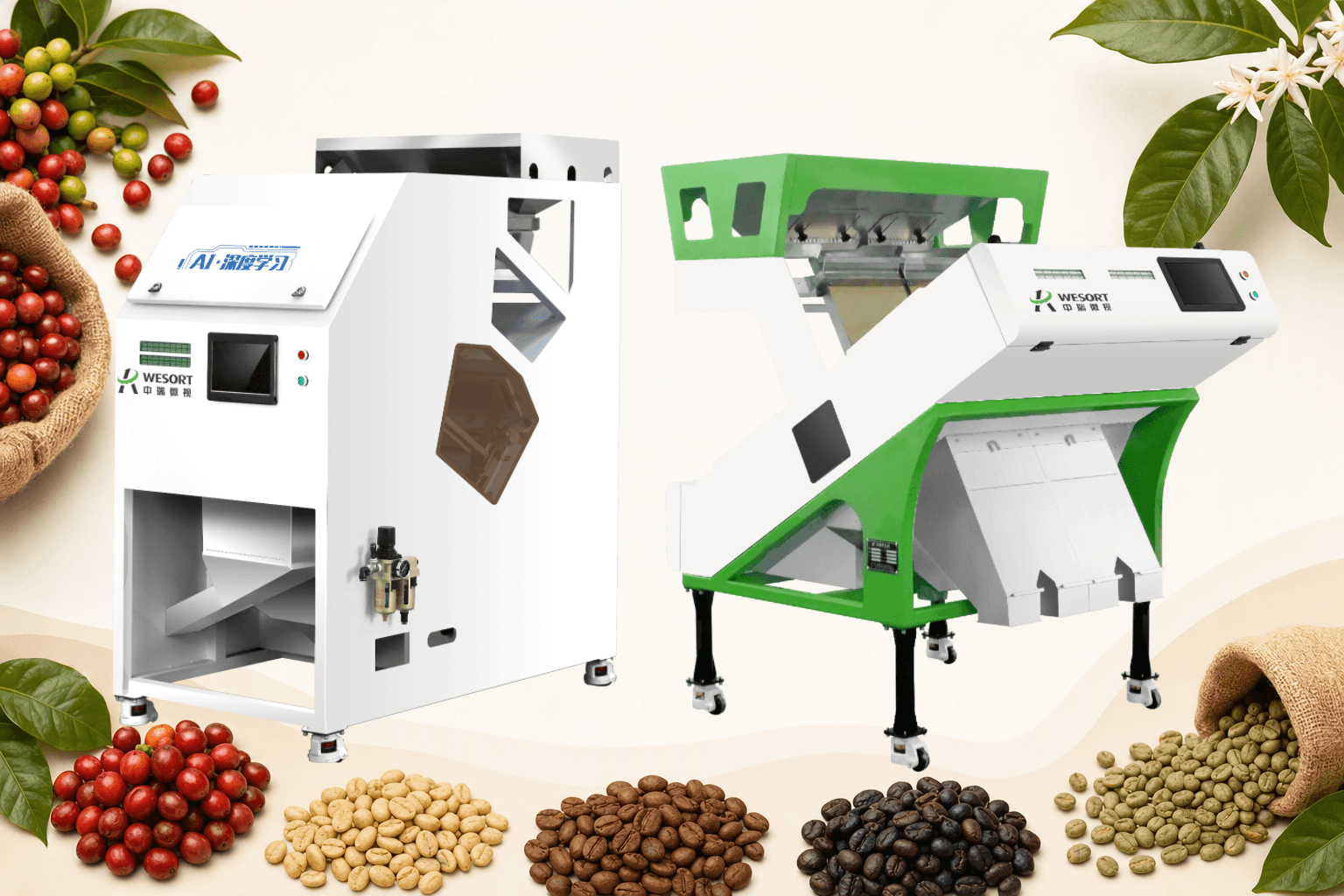
Cách tự động phân loại hạt cà phê với công nghệ phân loại màu AI-
Cách tự động phân loại hạt cà phê với công nghệ phân loại màu AI
Các nhà chế biến cà phê trên khắp thế giới đang chịu áp lực ngày càng tăng trong việc cung cấp chất lượng ổn định trong khi kiểm soát chi phí và đáp ứng các tiêu chuẩn xuất khẩu nghiêm ngặt. Phân loại thủ công - từ lâu là phương pháp mặc định để lo...
WESORT 2026 Khuyến mãi có thời gian giới hạn hiện đang hoạt động!-
WESORT 2026 Khuyến mãi có thời gian giới hạn hiện đang hoạt động!
Nâng cấp giải pháp phân loại của bạn với các lợi ích độc quyền Năm 2026. WESORT tiếp tục tiến về phía trước với sự đổi mới, chất lượng và cam kết. Chúng tôi chân thành đánh giá cao sự tin tưởng và hỗ trợ từ khách hàng trên toàn thế giới. Để trả...
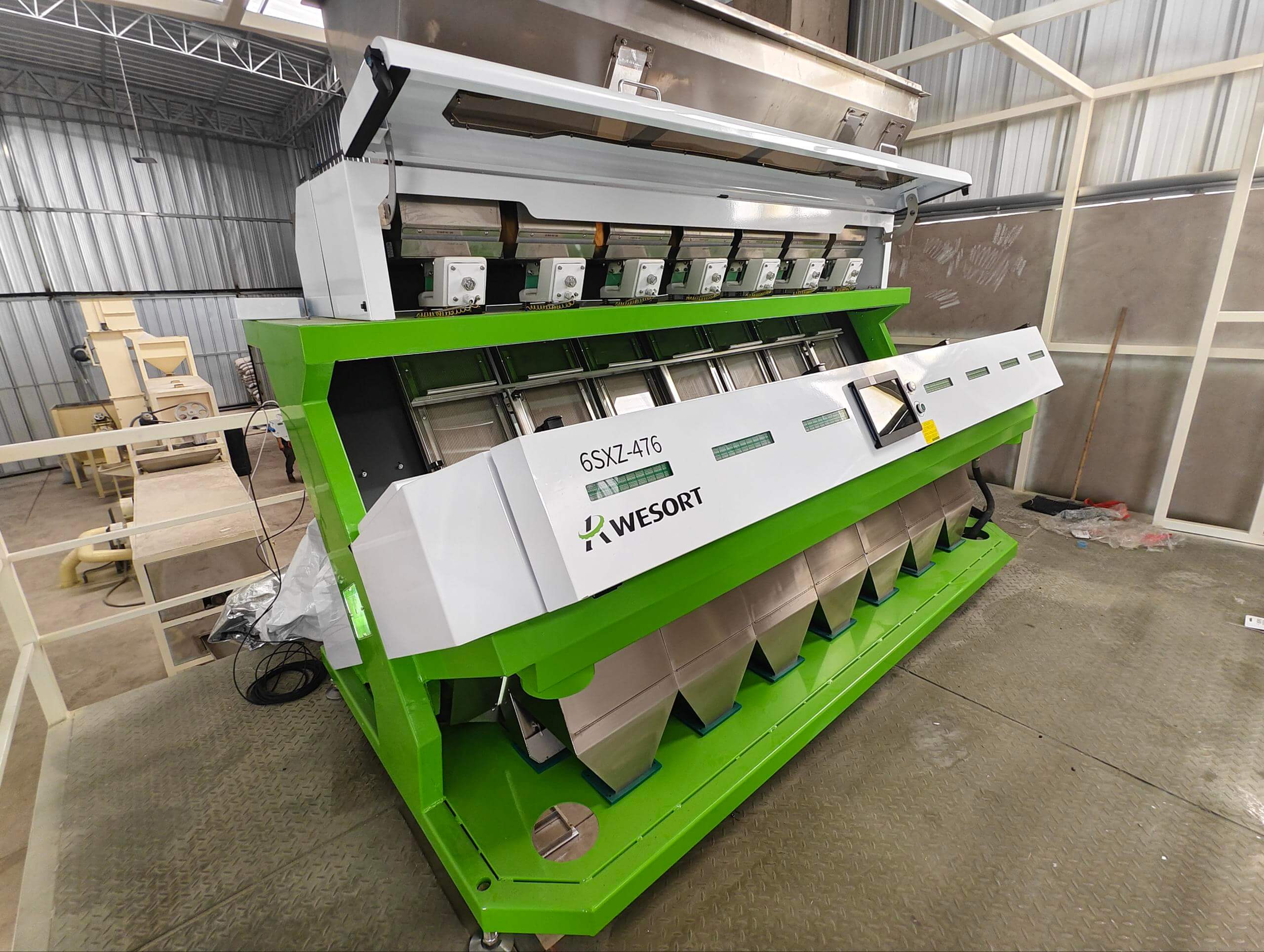
Cách phân loại đậu theo màu sắc và khiếm khuyết có thể nhìn thấy ở Mexico-
Cách phân loại đậu theo màu sắc và khiếm khuyết có thể nhìn thấy ở Mexico
Kết quả phân loại đậu tốt nhất không bắt đầu bằng cài đặt máy. Nó bắt đầu với một mô tả rõ ràng về đậu bạn muốn đóng gói, những khiếm khuyết mà người mua của bạn từ chối và số lượng sản phẩm tốt mà bạn chuẩn bị để mất. Câu trả lời ngắn gọn: Trước ...
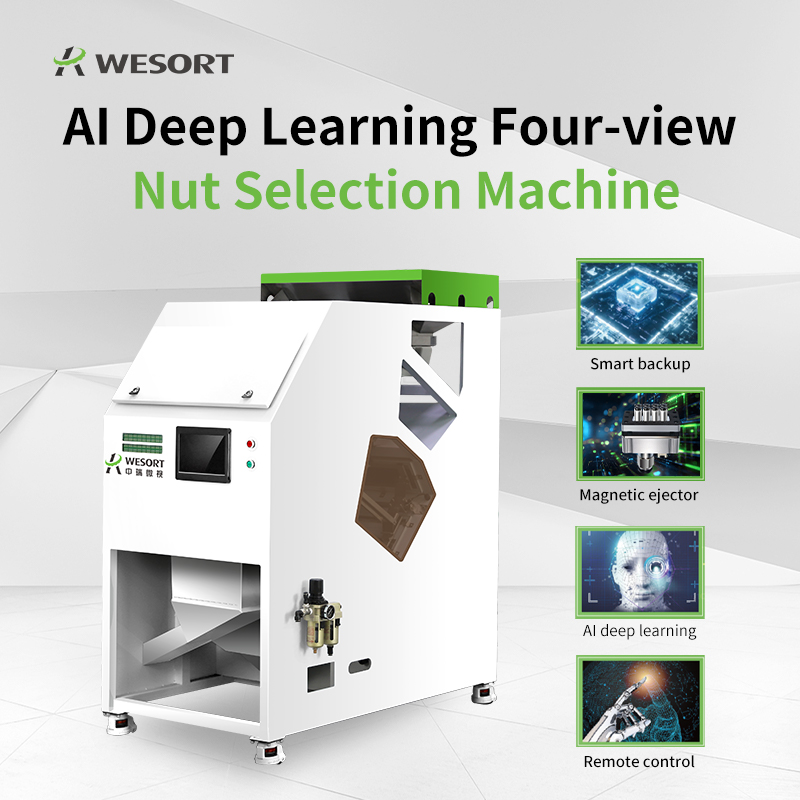
Cách chọn máy phân loại màu cho hạt phỉ, hạt dẻ cười, hạnh nhân và hồ đào-
Cách chọn máy phân loại màu cho hạt phỉ, hạt dẻ cười, hạnh nhân và hồ đào
Khi quá trình chế biến hạt bước vào những tuần bận rộn nhất, nguyên liệu thô không nhất quán, các khuyết tật có thể nhìn thấy và nguyên liệu lạ có thể nhanh chóng trở thành vấn đề sản xuất. Để xử lý bộ xử lý hạt phỉ, hạt dẻ cười, hạnh nhân, hồ đào, ...
Phân loại ớt khô: Loại bỏ vỏ sẫm màu, vỡ và nguyên liệu thực vật trước khi đóng gói-
Phân loại ớt khô: Loại bỏ vỏ sẫm màu, vỡ và nguyên liệu thực vật trước khi đóng gói
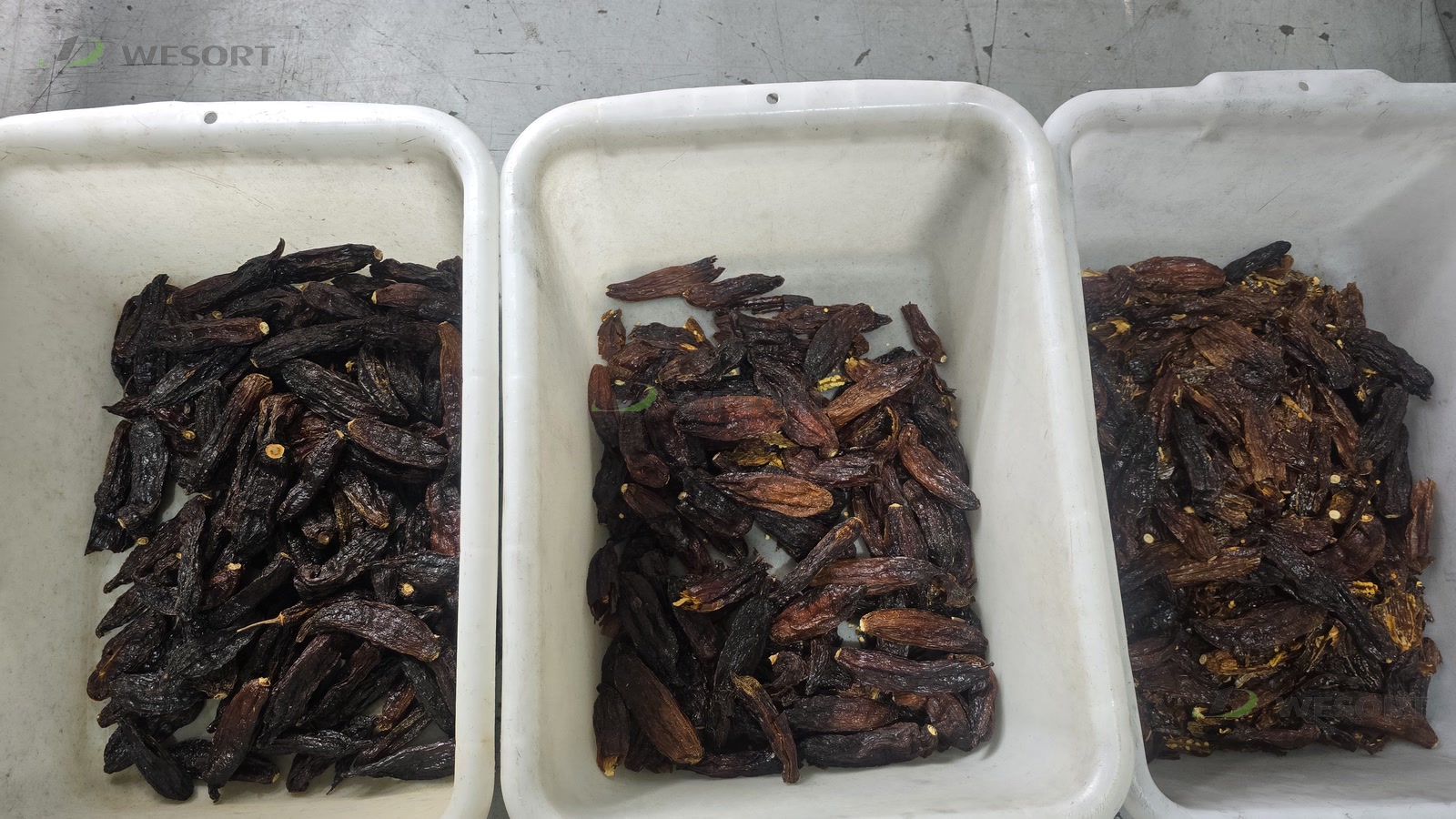
Rất nhiều hỗn hợp ớt khô hiếm khi chỉ có một vấn đề. Vỏ sẫm màu nằm bên cạnh vỏ màu nâu đỏ, toàn bộ sản phẩm được trộn với các mảnh vỡ, và thân hoặc vật liệu dạng sợi vẫn còn trong dòng chảy. WESORT giúp các nhà chế biến biến lô hỗn hợp đó thành cá...
Nut Color Sorter Nhà sản xuất: Cách chọn nhà cung cấp đáng tin cậy-
Nut Color Sorter Nhà sản xuất: Cách chọn nhà cung cấp đáng tin cậy
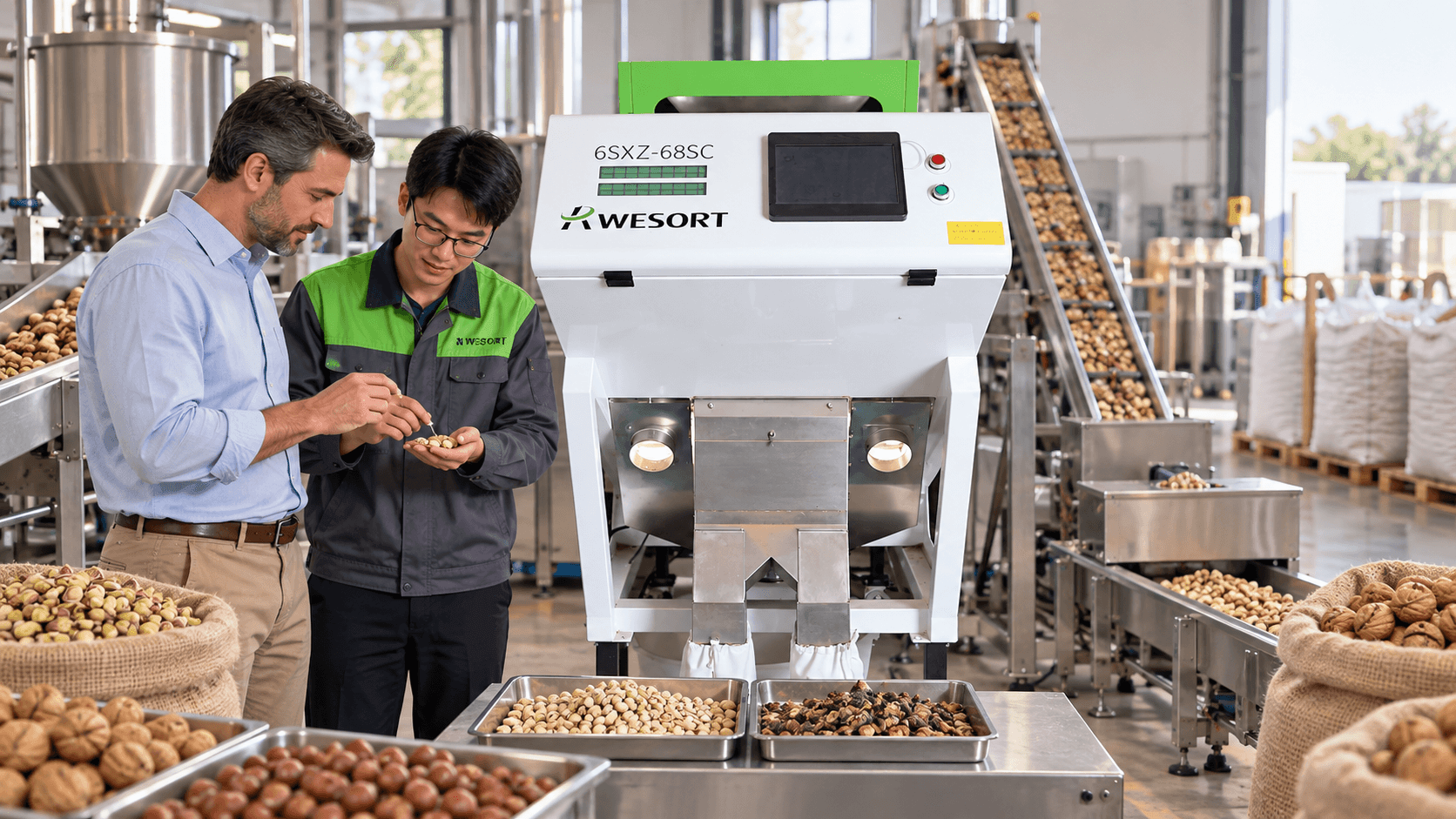
Một đáng tin cậy nhà sản xuất máy phân loại màu hạt Có thể chứng minh ba điều trước khi yêu cầu bạn mua: vật liệu thực tế của bạn có thể được tách ra, máy được đề xuất phù hợp với dây chuyền sản xuất của bạn và hỗ trợ kỹ thuật sẽ vẫn có sẵn sau khi...
Open Shell, Closed Shell hoặc Kernel: Máy phân loại hạt dẻ cười nên xác định điều gì?-
Open Shell, Closed Shell hoặc Kernel: Máy phân loại hạt dẻ cười nên xác định điều gì?
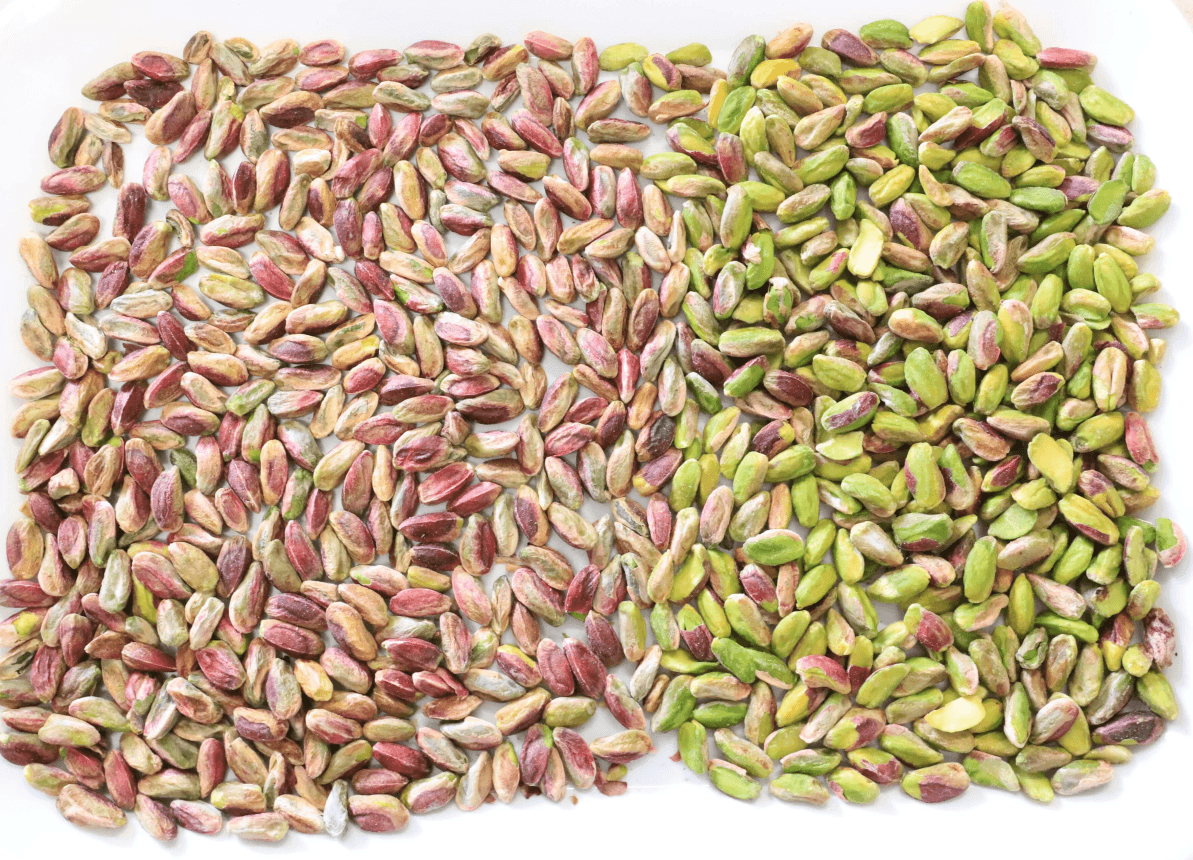
MỘT máy phân loại hạt dẻ cười nên được cấu hình cho vật liệu nhập vào nó, không chỉ cho từ "quả hồ trăn". Một dòng trong vỏ có thể cần tách các vỏ mở và đóng. Một dòng hạt nhân có thể cần các lớp màu và loại bỏ các mảnh vỡ hoặc tối. Một dòng sau nứt...
Cách chọn máy phân loại hạt dẻ cười cho bộ xử lý Thổ Nhĩ Kỳ-
Cách chọn máy phân loại hạt dẻ cười cho bộ xử lý Thổ Nhĩ Kỳ
Chọn đúng máy phân loại hồ trăn ở Thổ Nhĩ Kỳ không chỉ đơn giản là vấn đề so sánh chiều rộng máy, số lượng máng hoặc công suất được quảng cáo. Đối với các nhà chế biến hạt dẻ cười, câu hỏi quan trọng hơn là: Chính xác thì máy cần tách những gì? H...
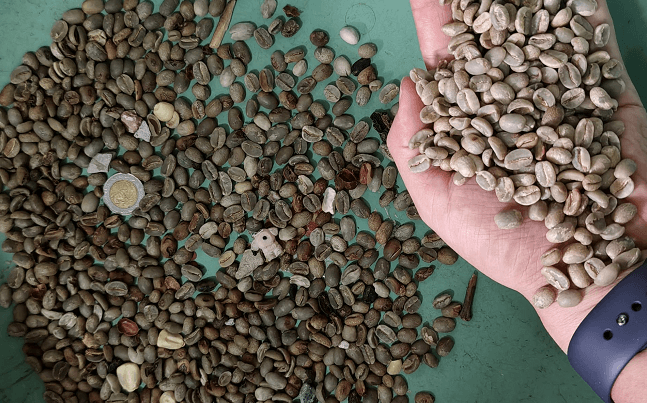
Bạn có chế biến cà phê ở Colombia không? 5 điểm dữ liệu cần chuẩn bị trước khi chọn máy phân loại-
Bạn có chế biến cà phê ở Colombia không? 5 điểm dữ liệu cần chuẩn bị trước khi chọn máy phân loại
Chọn một máy phân loại cà phê ở Colombia không nên bắt đầu với số lượng máng hoặc công suất tiêu đề. Nó nên bắt đầu với năm sự thật về cà phê vào dây chuyền của bạn và sản phẩm bạn cần cung cấp. Nếu không có chúng, hai máy trông giống nhau trên gi...
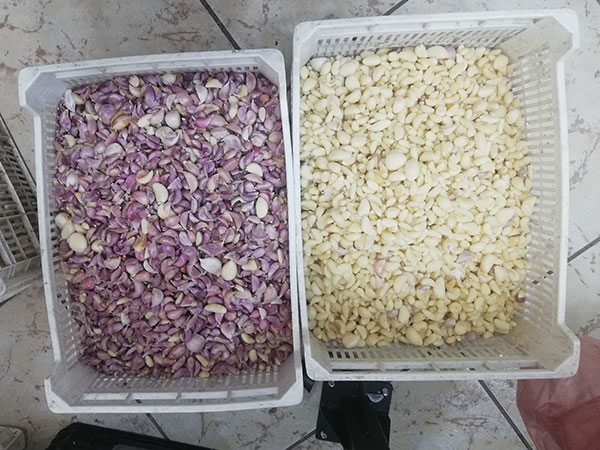
Những khiếm khuyết có thể nhìn thấy một máy phân loại tỏi có thể tách ra?-
Những khiếm khuyết có thể nhìn thấy một máy phân loại tỏi có thể tách ra?
MỘT máy phân loại tỏi có thể tách các đinh hương khác biệt rõ ràng với sản phẩm được chấp nhận về màu sắc, độ che phủ của da, hình dạng, kích thước hoặc tình trạng bề mặt. Các mục tiêu điển hình bao gồm đinh hương có vỏ màu tím kèm theo, bong tróc k...
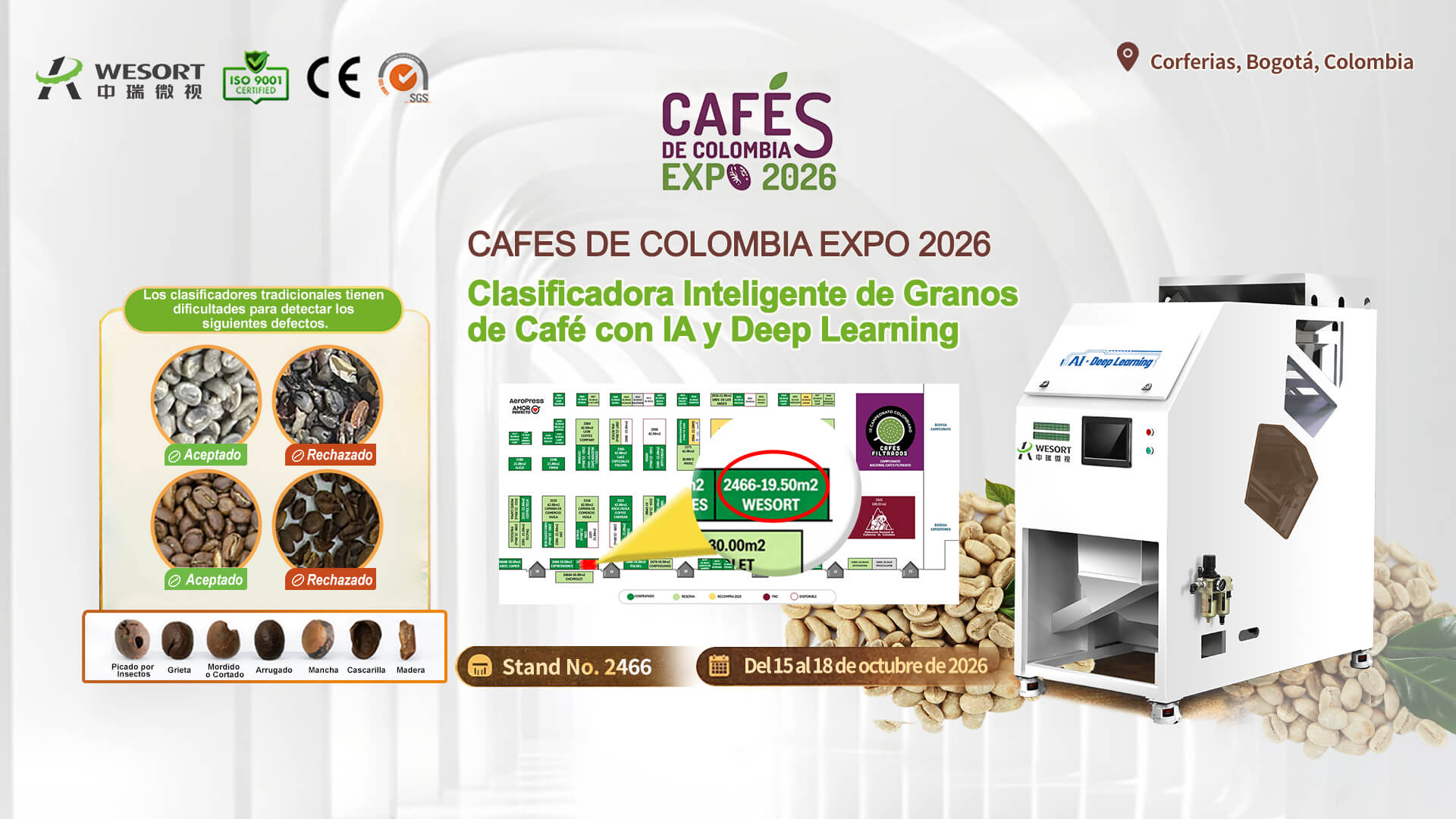
Mang cà phê của bạn đến gian hàng 2466: Thử nghiệm WESORT Trực tiếp tại Cafés de Colombia Expo 2026-
Mang cà phê của bạn đến gian hàng 2466: Thử nghiệm WESORT Trực tiếp tại Cafés de Colombia Expo 2026
Đừng chỉ mang theo danh thiếp. Mang cà phê mà nhóm của bạn đang gặp khó khăn trong việc sắp xếp. Từ ngày 15 đến ngày 18 tháng 10, WESORT sẽ có mặt tại Triển lãm cà phê Colombia 2026 ở Bogotá. Tại Gian hàng 2466, du khách có thể xem cách phân loại q...
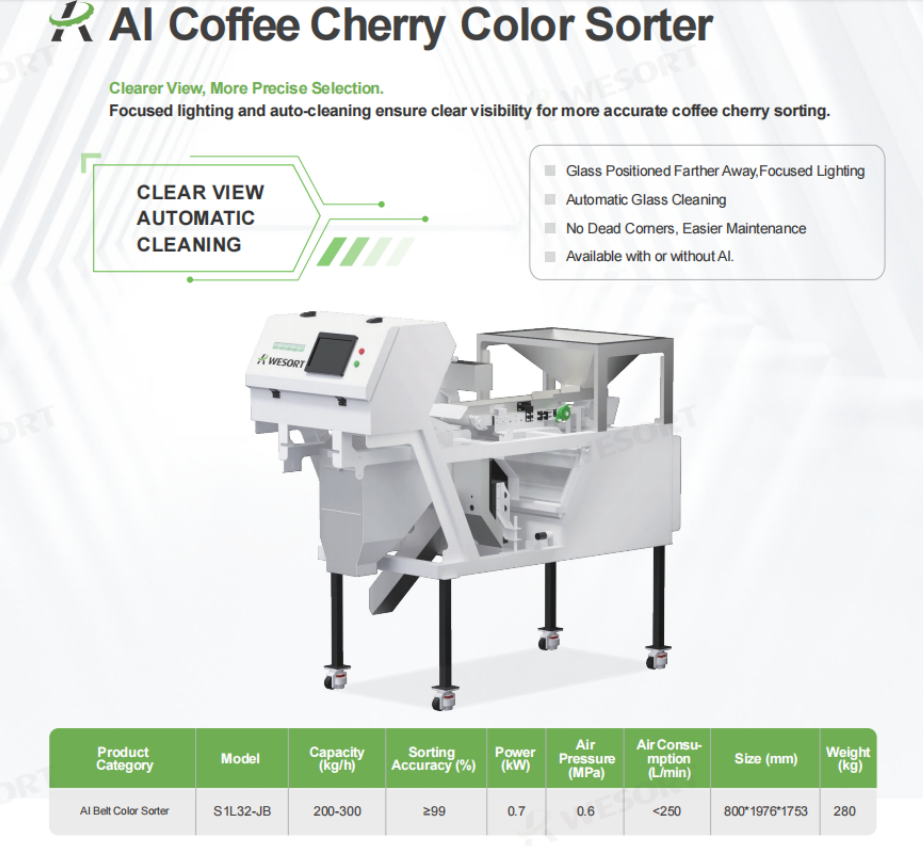
Công nghệ phân loại cà phê WESORT cho anh đào tươi và hạt cà phê-
Công nghệ phân loại cà phê WESORT cho anh đào tươi và hạt cà phê
Giới thiệu vấn đề và bối cảnh ngành Chế biến cà phê kết hợp biến đổi tự nhiên trong nguyên liệu nông nghiệp với người mua ngày càng cụ thể và yêu cầu chất lượng. Anh đào cà phê tươi, cà phê giấy da, xanh lá cây đậu và hạt rang là những vật liệu khác ...
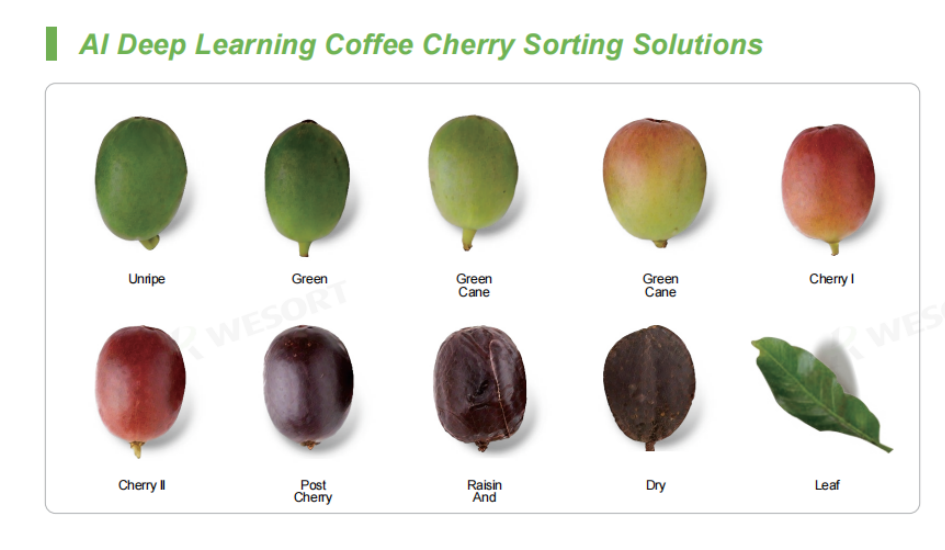
Cách phân loại cà phê anh đào trước khi chế biến - và khi phân loại quang học giúp-
Cách phân loại cà phê anh đào trước khi chế biến - và khi phân loại quang học giúp
Phân loại anh đào cà phê tươi trước khi nghiền hoặc sấy khô có thể giúp bộ xử lý tách các loại trái cây khác nhau rõ ràng thành nhiều loại nhất quán hơn. Cách tiếp cận phù hợp phụ thuộc vào quả anh đào, tiêu chuẩn chấp nhận và nơi máy phân loại sẽ nằ...
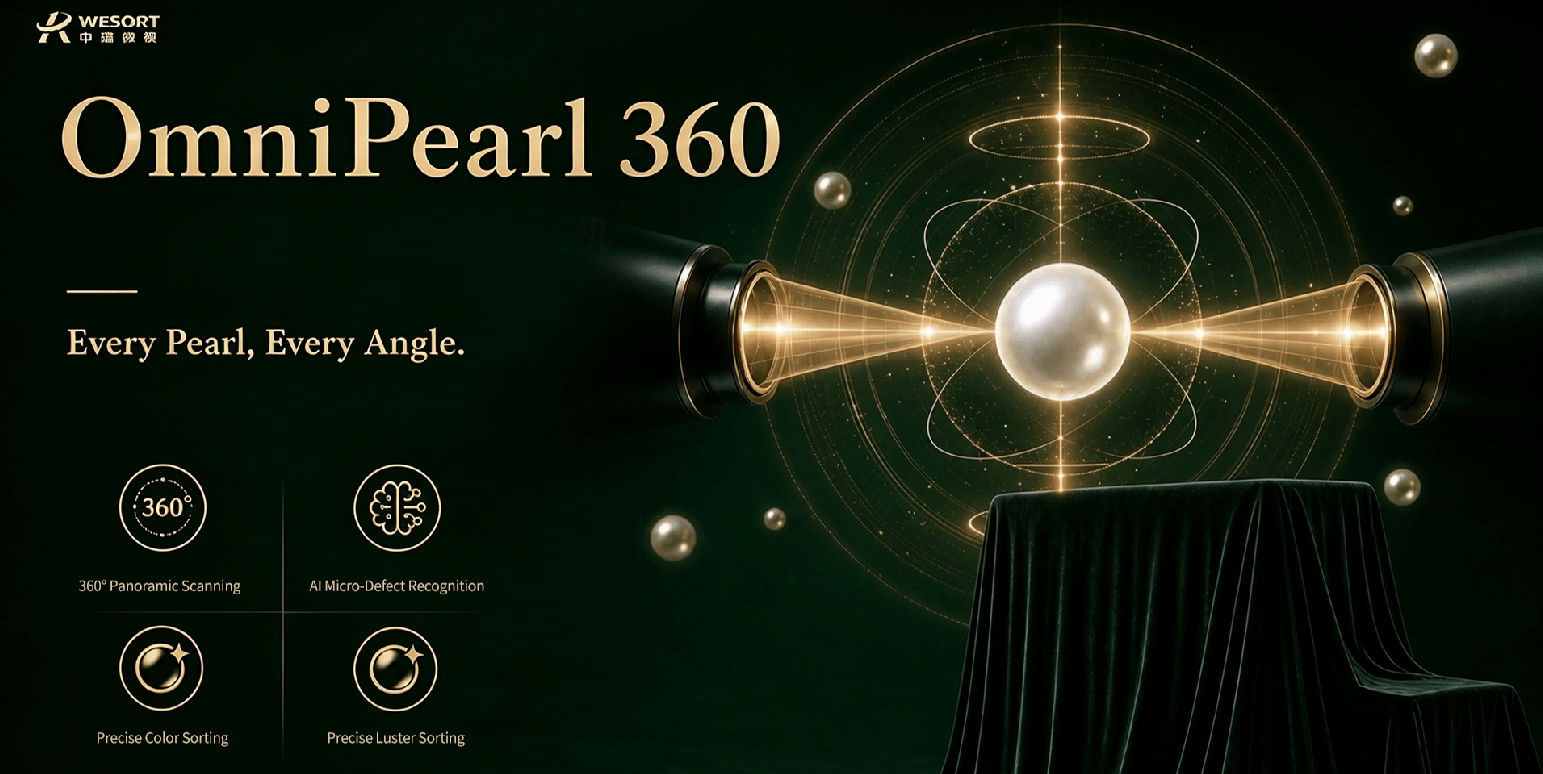
WESORT giới thiệu máy phân loại ngọc trai OmniPearl 360 AI: Mọi viên ngọc trai, mọi góc độ-
WESORT giới thiệu máy phân loại ngọc trai OmniPearl 360 AI: Mọi viên ngọc trai, mọi góc độ
Mọi viên ngọc trai, mọi góc độ. XÚC XÍCH NGỌC TRAI PANORAMIC 360 ° Phần khó nhất của việc phân loại ngọc trai là không nhìn thấy ngọc trai một lần. Nó nhìn thấy đủ bề mặt của nó để đưa ra quyết định nhất quán. Một đốm đen có thể nằm ở phía sau. Một v...
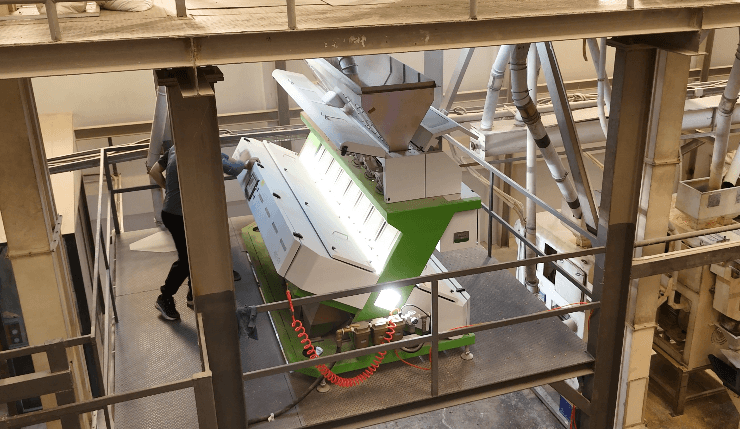
Cách chọn máy phân loại ngô-
Cách chọn máy phân loại ngô
Một cách thực tế để chọn một máy phân loại ngô là so sánh nhà máy của bạn với các nhà chế biến ngô đã giải quyết được các vấn đề tương tự. WESORT đã cung cấp các giải pháp phân loại ngô cho các quy mô sản xuất khác nhau, từ dự án ngô trắng hai kênh...
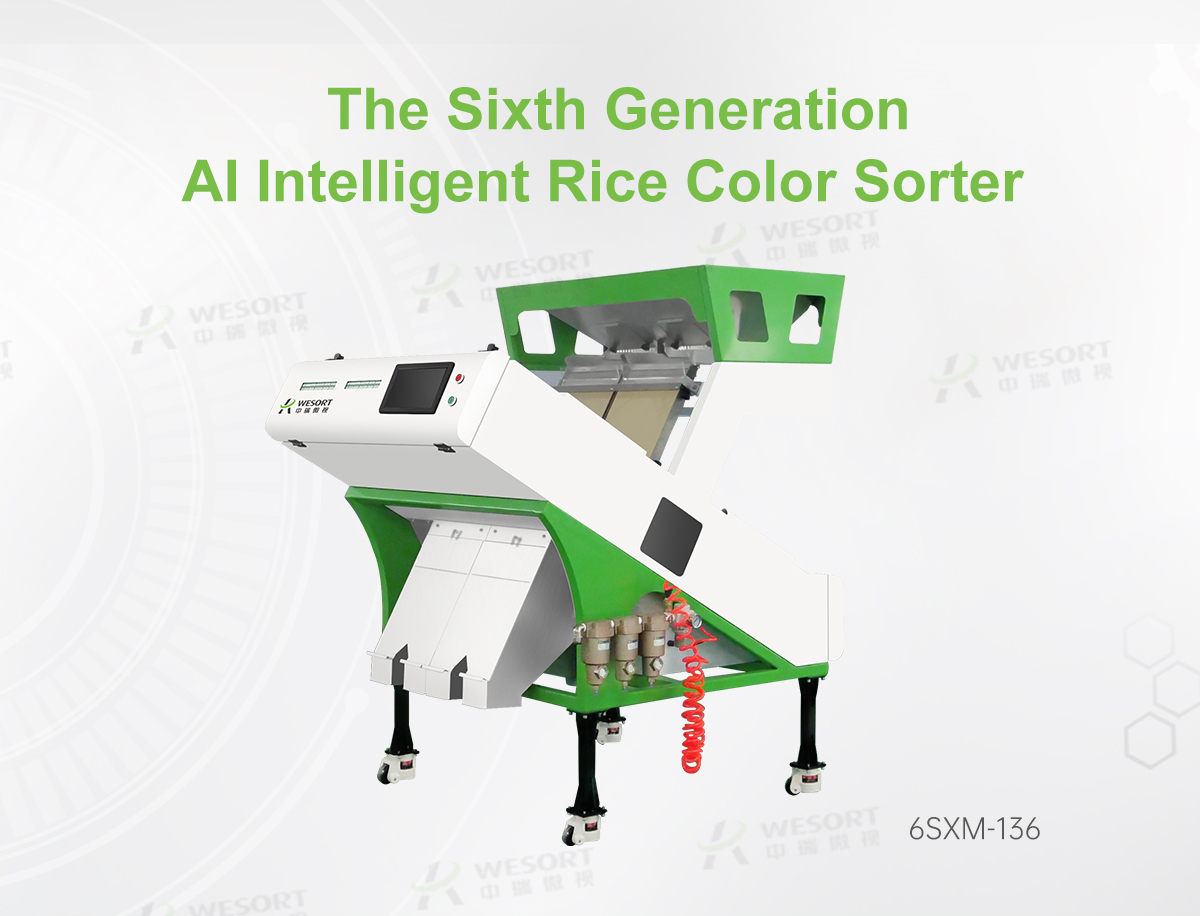
Máy phân loại gạo quang học: Công nghệ cho độ tinh khiết của sản phẩm cao hơn-
Máy phân loại gạo quang học: Công nghệ cho độ tinh khiết của sản phẩm cao hơn
Một máy phân loại gạo quang học cải thiện độ tinh khiết bằng cách biến những khác biệt có thể nhìn thấy thành các quyết định phân tách có kiểm soát. Cho ăn ổn định cho thấy gạo, độ chiếu sáng và máy ảnh ghi lại các đặc điểm có thể nhìn thấy, phần m...
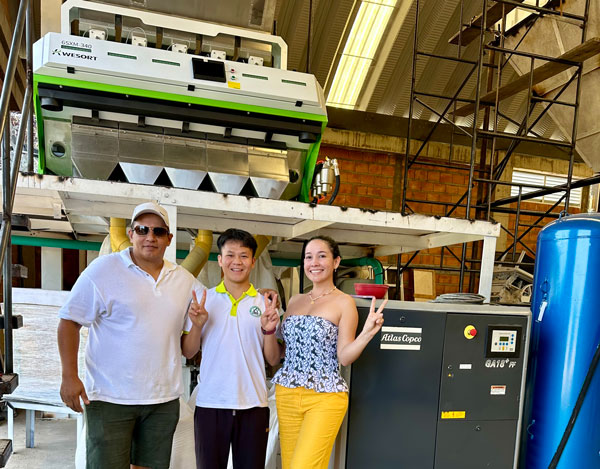
Cách chọn máy phân loại gạo cho nhà máy chế biến-
Cách chọn máy phân loại gạo cho nhà máy chế biến
Chọn máy phân loại gạo bằng cách kết hợp giống lúa, khuyết tật mục tiêu, thông lượng yêu cầu, tiêu chuẩn thành phẩm, lượng gạo tốt có thể chấp nhận được và các tiện ích của công trường. Chỉ so sánh máy sau khi kiểm tra vật liệu đại diện và xem xét cả...
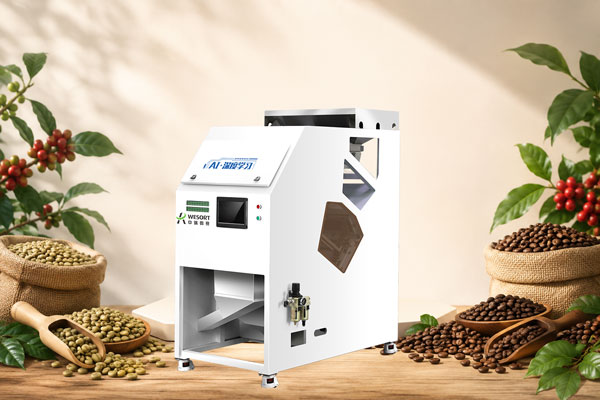
Phân loại hạt cà phê AI: Cách WESORT loại bỏ hạt bị lỗi và cải thiện tính nhất quán về chất lượng-
Phân loại hạt cà phê AI: Cách WESORT loại bỏ hạt bị lỗi và cải thiện tính nhất quán về chất lượng
Các nhà chế biến cà phê phải đối mặt với một thách thức liên tục khi duy trì chất lượng nhất quán trên xanh lá cây và hạt cà phê rang. Quakers, hạt cháy xém, hạt màu bất thường, hạt bị hỏng và vật liệu lạ có thể ảnh hưởng đến sự xuất hiện và tính nhấ...
Máy phân loại màu cà phê ở Mexico: WESORT giúp các nhà chế biến cà phê cải thiện chất lượng và hiệu quả như thế nào-
Máy phân loại màu cà phê ở Mexico: WESORT giúp các nhà chế biến cà phê cải thiện chất lượng và hiệu quả như thế nào
Mexico có một ngành công nghiệp chế biến cà phê mạnh mẽ, với các nhà sản xuất và chế biến cà phê phải đối mặt với các yêu cầu ngày càng khắt khe về chất lượng, tính nhất quán và hiệu quả sản xuất. Từ anh đào cà phê và xanh lá cây hạt cà phê đến cà ph...
Thiết bị nào phân loại hạt cà phê? Hướng dẫn về máy phân loại hạt cà phê AI-
Thiết bị nào phân loại hạt cà phê? Hướng dẫn về máy phân loại hạt cà phê AI
Việc kiểm soát chất lượng cà phê phụ thuộc nhiều vào thiết bị được sử dụng để loại bỏ hạt bị lỗi, nguyên liệu lạ và sự không nhất quán về chất lượng trước khi rang hoặc xuất khẩu. Đối với các nhà chế biến cà phê, nhà máy rang xay và nhà xuất khẩu, ...
Cách tự động phân loại hạt cà phê với công nghệ phân loại màu AI-
Cách tự động phân loại hạt cà phê với công nghệ phân loại màu AI
Các nhà chế biến cà phê trên khắp thế giới đang chịu áp lực ngày càng tăng trong việc cung cấp chất lượng ổn định trong khi kiểm soát chi phí và đáp ứng các tiêu chuẩn xuất khẩu nghiêm ngặt. Phân loại thủ công - từ lâu là phương pháp mặc định để lo...
WESORT 2026 Khuyến mãi có thời gian giới hạn hiện đang hoạt động!-
WESORT 2026 Khuyến mãi có thời gian giới hạn hiện đang hoạt động!
Nâng cấp giải pháp phân loại của bạn với các lợi ích độc quyền Năm 2026. WESORT tiếp tục tiến về phía trước với sự đổi mới, chất lượng và cam kết. Chúng tôi chân thành đánh giá cao sự tin tưởng và hỗ trợ từ khách hàng trên toàn thế giới. Để trả...
Cách phân loại đậu theo màu sắc và khiếm khuyết có thể nhìn thấy ở Mexico-
Cách phân loại đậu theo màu sắc và khiếm khuyết có thể nhìn thấy ở Mexico
Kết quả phân loại đậu tốt nhất không bắt đầu bằng cài đặt máy. Nó bắt đầu với một mô tả rõ ràng về đậu bạn muốn đóng gói, những khiếm khuyết mà người mua của bạn từ chối và số lượng sản phẩm tốt mà bạn chuẩn bị để mất. Câu trả lời ngắn gọn: Trước ...
Cách chọn máy phân loại màu cho hạt phỉ, hạt dẻ cười, hạnh nhân và hồ đào-
Cách chọn máy phân loại màu cho hạt phỉ, hạt dẻ cười, hạnh nhân và hồ đào
Khi quá trình chế biến hạt bước vào những tuần bận rộn nhất, nguyên liệu thô không nhất quán, các khuyết tật có thể nhìn thấy và nguyên liệu lạ có thể nhanh chóng trở thành vấn đề sản xuất. Để xử lý bộ xử lý hạt phỉ, hạt dẻ cười, hạnh nhân, hồ đào, ...
Phân loại ớt khô: Loại bỏ vỏ sẫm màu, vỡ và nguyên liệu thực vật trước khi đóng gói-
Phân loại ớt khô: Loại bỏ vỏ sẫm màu, vỡ và nguyên liệu thực vật trước khi đóng gói
Rất nhiều hỗn hợp ớt khô hiếm khi chỉ có một vấn đề. Vỏ sẫm màu nằm bên cạnh vỏ màu nâu đỏ, toàn bộ sản phẩm được trộn với các mảnh vỡ, và thân hoặc vật liệu dạng sợi vẫn còn trong dòng chảy. WESORT giúp các nhà chế biến biến lô hỗn hợp đó thành cá...
Nut Color Sorter Nhà sản xuất: Cách chọn nhà cung cấp đáng tin cậy-
Nut Color Sorter Nhà sản xuất: Cách chọn nhà cung cấp đáng tin cậy
Một đáng tin cậy nhà sản xuất máy phân loại màu hạt Có thể chứng minh ba điều trước khi yêu cầu bạn mua: vật liệu thực tế của bạn có thể được tách ra, máy được đề xuất phù hợp với dây chuyền sản xuất của bạn và hỗ trợ kỹ thuật sẽ vẫn có sẵn sau khi...